
Currently Empty: ₹0.00

0 Comments
INTRODUCTION
Believe it or not, most professionals spend more time sitting on their office chair than relaxing on their sofa. With workdays stretching well beyond seven to eight hours, the importance of choosing the right office chair is often underestimated.
Even with hybrid and work-from-home routines becoming common, many people still work from beds or couches, which eventually leads to back pain, stiff shoulders, and poor posture. A well-designed office chair helps maintain proper posture, supports the spine, and reduces long-term discomfort.
With so many options available today, selecting the right chair can feel confusing. This blog breaks down the different types of office chairs and helps you understand which one suits your workspace best.
Different Types of Office Chairs
Every workspace has different requirements. Understanding how each type of office chair functions can help you make a smarter choice.
1.Ergonomic Office Chairs
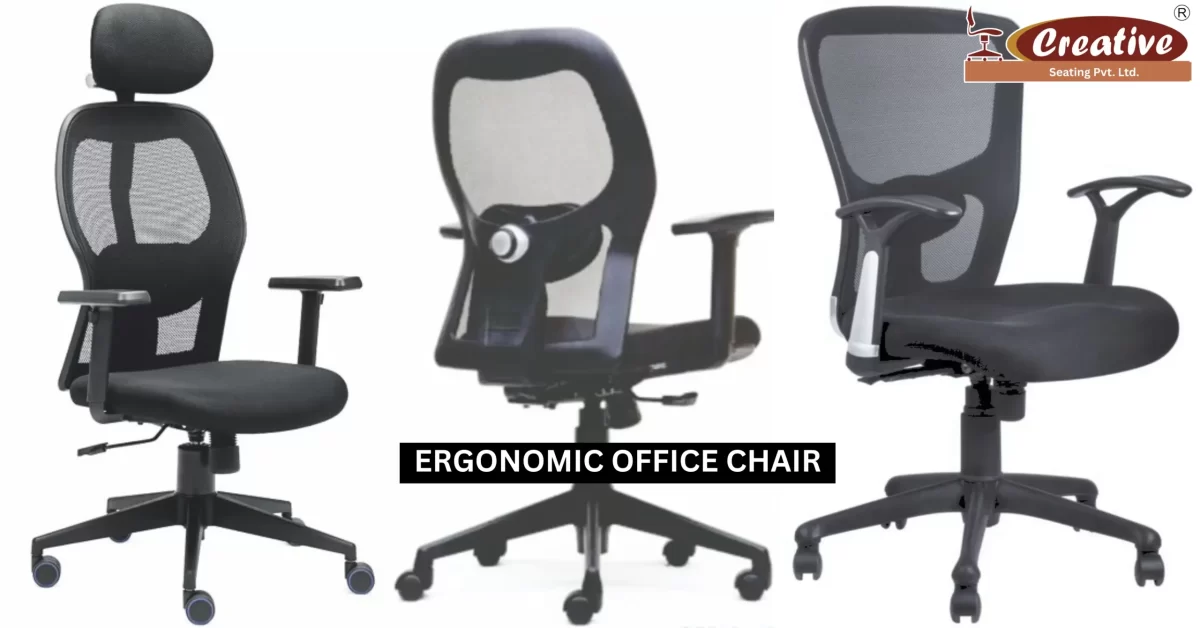
Ergonomic office chairs are designed to support the natural alignment of the body. As prolonged sitting has become part of daily work life, issues such as lower back pain, neck strain, and fatigue have increased significantly.
These chairs offer adjustable features like seat height, lumbar support, armrests, and backrest tilt. This allows users to customise the chair according to their body type and working posture.
If you spend long hours at your desk, an ergonomic chair is one of the best investments you can make for your comfort and productivity.
2.Task Chairs
Task chairs are simple, functional, and widely used in offices. They usually come with basic height adjustment, a swivel base, and minimal back support.
These chairs are suitable for short work sessions, training rooms, or compact home offices. However, for extended sitting hours, task chairs may not provide enough posture support.
They are ideal for users looking for a budget-friendly and space-saving seating option.
3.Executive Office Chairs
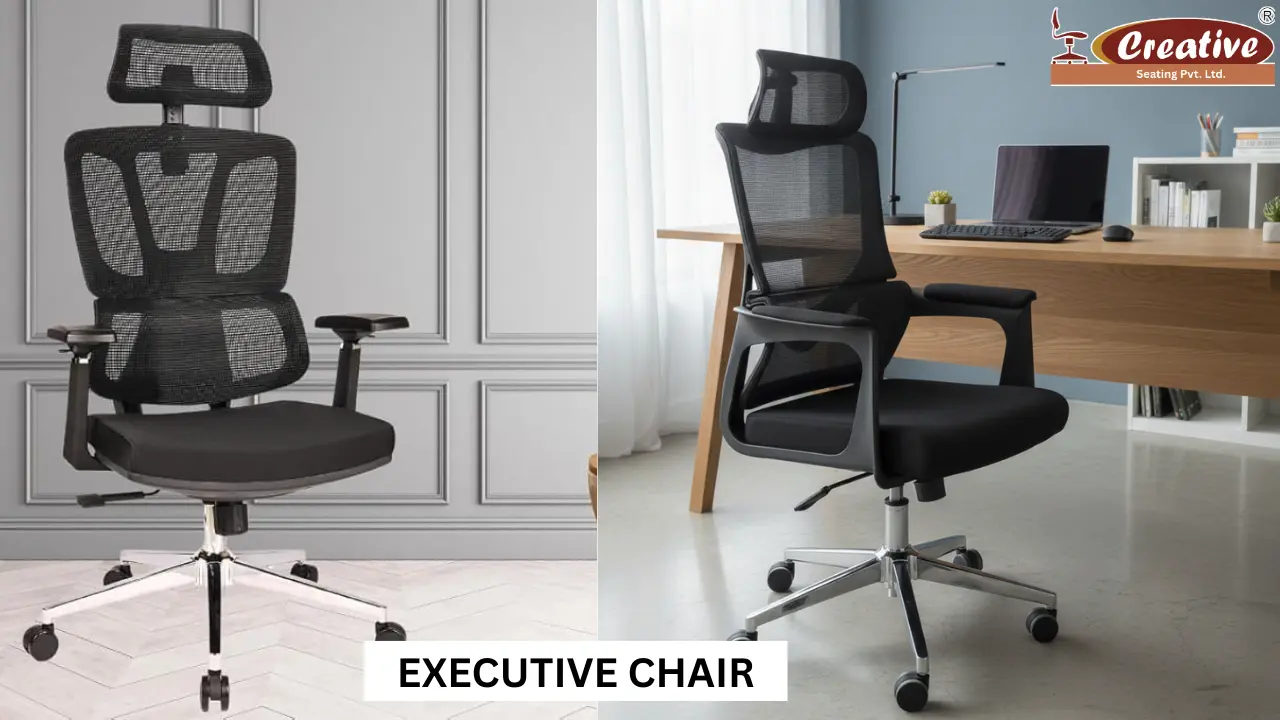
Executive office chairs are designed for leadership roles and private cabins. These chairs feature high backs, headrests, cushioned seating, and a more premium appearance.
Apart from comfort, executive chairs add a professional and authoritative look to the workspace. Many models include reclining mechanisms that help reduce pressure on the spine during long working hours.
If comfort and appearance are equally important to you, an executive chair is an excellent choice.
4.Mesh Office Chairs
Mesh office chairs are popular for their breathable design and modern aesthetics. The mesh back allows air circulation, keeping users cool even during long work sessions.
These chairs are lightweight, easy to maintain, and suitable for open office layouts. While they may offer less padding than upholstered chairs, many users prefer mesh chairs for their flexibility and ventilation.
5.Headrest Office Chairs
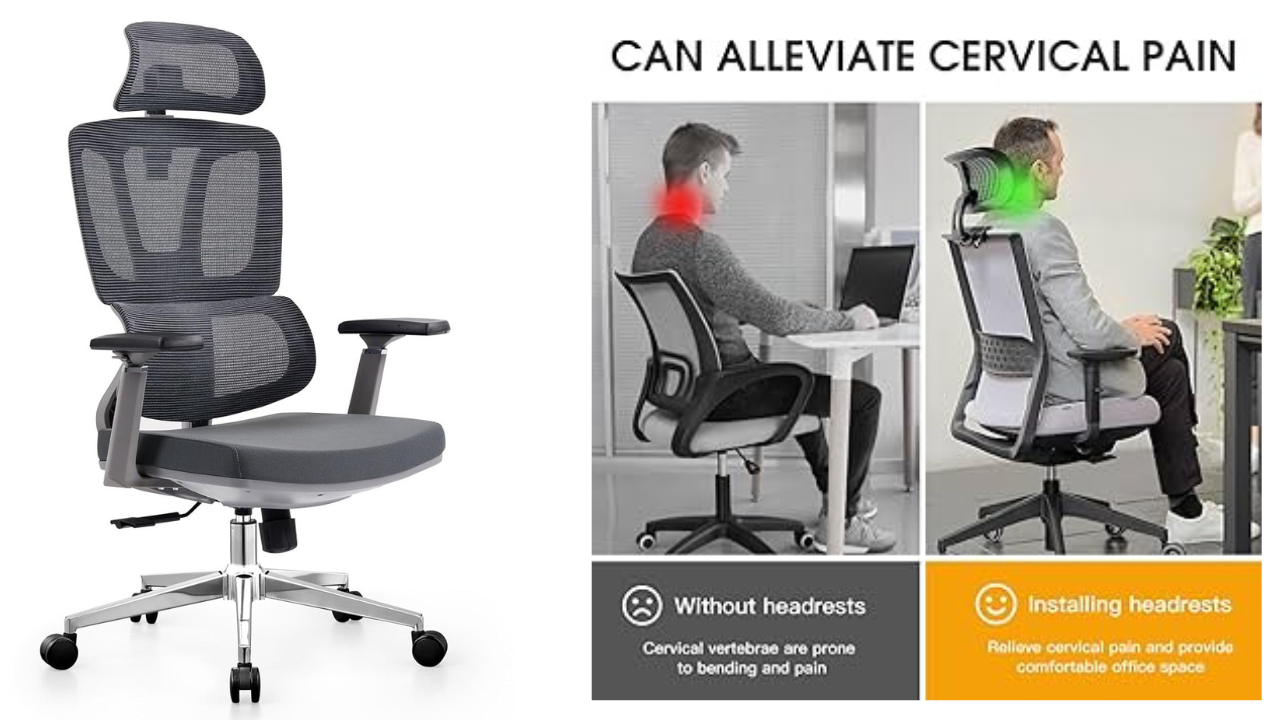
Headrest chairs provide additional support for the neck and upper back. The adjustable headrest helps reduce strain and encourages better posture during extended sitting periods.
These chairs are especially beneficial for professionals who experience neck or shoulder discomfort and spend long hours working at their desks.
Factors to Consider When Choosing an Office Chair
Before buying an office chair, keep these key points in mind:
Comfort & Body Fit
Choose a chair that matches your height and body type. Proper seat depth and back support help maintain a natural sitting posture.
Duration of Use
If you sit for long hours, prioritize ergonomic features like lumbar support and adjustability.
Material & Breathability
Mesh chairs improve airflow, while cushioned chairs provide a softer seating experience. Choose based on comfort and environment.
Adjustability
A chair with adjustable seat height, armrests, and backrest allows better customisation.
Budget
A quality office chair is an investment. Balancing comfort, durability, and cost ensures long-term value.
FAQ
Frequently Asked Questions (FAQs)
Q1. Which office chair is best for long working hours?
Ergonomic chairs with lumbar support and adjustable features are best for extended use.
Q2. Are mesh chairs comfortable for daily use?
Yes. Mesh chairs offer breathability and flexibility, making them suitable for long hours.
Q3. Do executive chairs provide better support?
Executive chairs offer enhanced comfort and posture support, especially for leadership roles.
Q4. How often should office chairs be replaced?
With proper quality and usage, a good office chair can last several years.
Conclusion
Choosing the right office chair is not just about looks—it directly affects your health, comfort, and work performance. From ergonomic and mesh chairs to executive seating, each type serves a specific purpose.
By understanding your work habits and workspace needs, you can select a chair that supports you throughout the day. The right office chair leads to better posture, reduced discomfort, and a more productive work environment.


