Currently Empty: ₹0.00

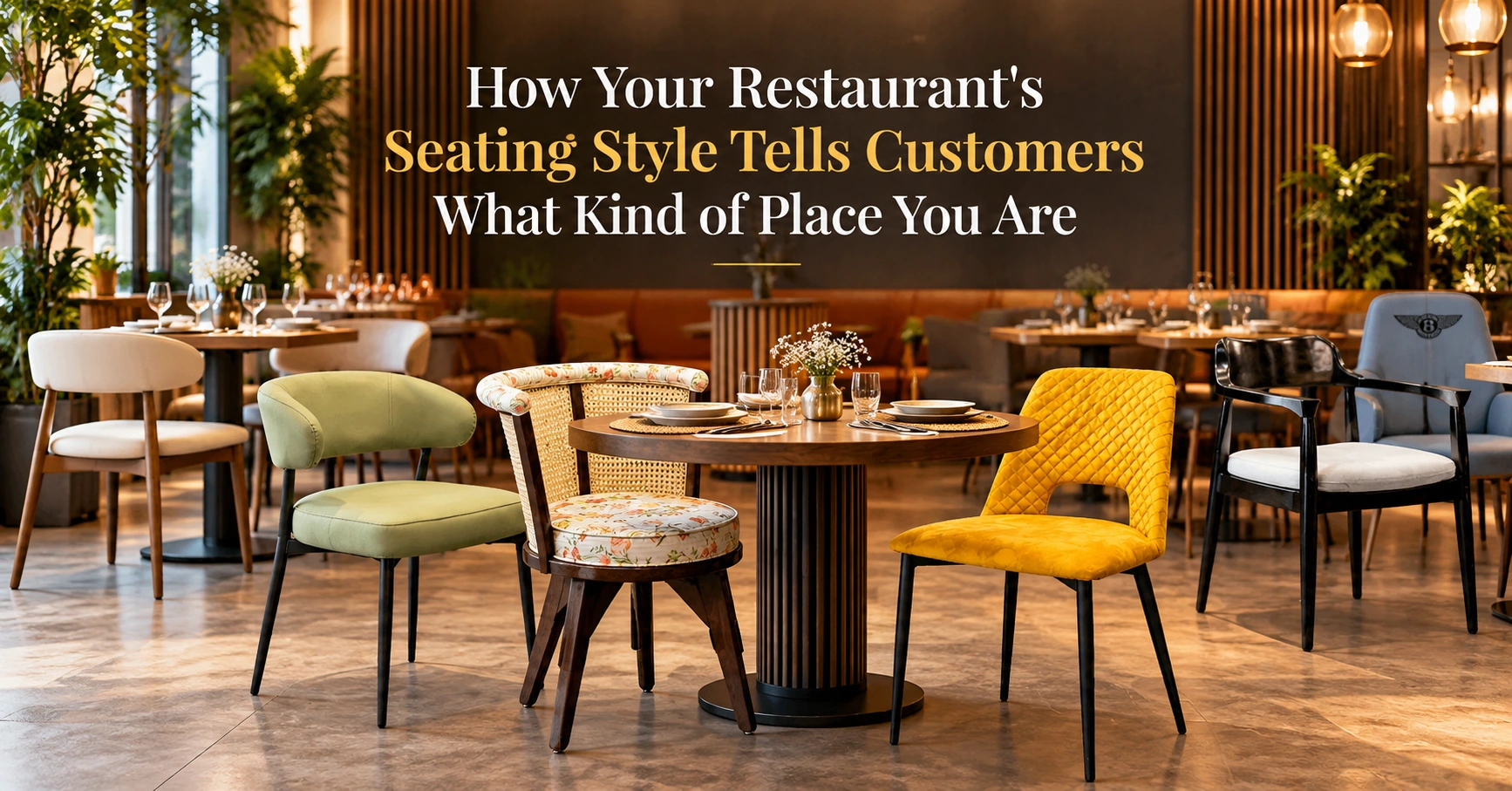
When customers enter a restaurant, they start forming an opinion before they even read the menu. The lighting, colors, music, tables and, most importantly, the seating all contribute to that first impression.
Restaurant chairs are not simply furniture for customers to sit on. They are part of your restaurant’s identity. A comfortable upholstered chair can make a restaurant feel premium and relaxed, while a simple modern chair can create a casual and energetic atmosphere.
This is why restaurant interior design seating should be planned carefully. The right seating style can support your brand image, improve customer comfort and make the entire dining area feel more connected.
If you are opening a new restaurant or renovating an existing one, here is how your seating choices can communicate what kind of restaurant you are.
1. Your Chairs Create the First Impression
Imagine entering two restaurants.
The first has elegant upholstered chairs, warm lighting and spacious tables. The second has colorful chairs, compact tables and a more casual arrangement.
Even before looking at the menu, you will probably expect two completely different dining experiences.
This is the power of restaurant ambiance seating.
Customers naturally connect furniture design with the type of experience they expect. Your seating can communicate whether your restaurant is:
- Premium and luxurious
- Modern and trendy
- Casual and family-friendly
- Minimal and sophisticated
- Traditional and comfortable
- Fast-paced and practical
Therefore, restaurant owners should think beyond the question, “Which chair looks good?” Instead, ask, “What should customers feel when they sit here?”
2. Fine Dining Needs a Different Seating Style
Fine dining restaurants usually focus on creating a sophisticated and comfortable experience. Customers may spend one to three hours at their table, so seating comfort becomes extremely important.
For this type of restaurant, consider:
- Upholstered dining chairs
- Cushioned seats and backs
- Elegant wooden or metal frames
- Neutral or rich fabric colors
- Curved or refined chair designs
- Wider seating for better comfort
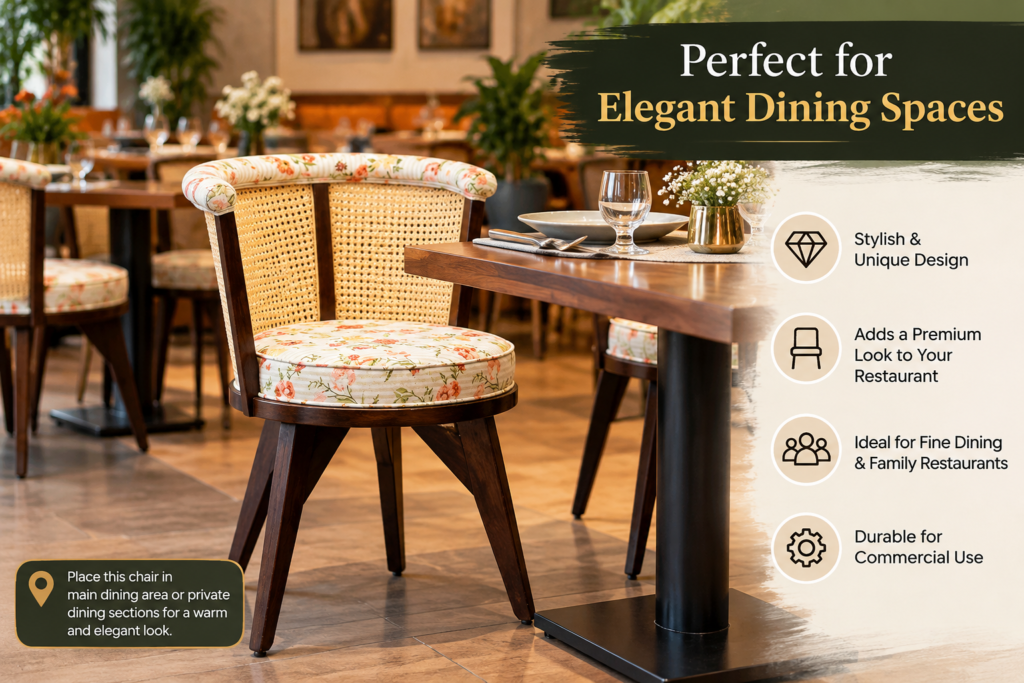
The chair should look premium without becoming uncomfortable or difficult to maintain.
For example, a restaurant serving premium Indian cuisine may use wooden dining chairs with cushioned seating to create a warm, elegant environment. A contemporary fine-dining restaurant may prefer modern upholstered chairs with clean lines.
When selecting dining chair design India restaurants can use, the design should also work with the restaurant’s overall interior theme.
3. Casual Restaurants Can Be More Flexible
Casual restaurants generally need seating that is attractive, comfortable and practical.
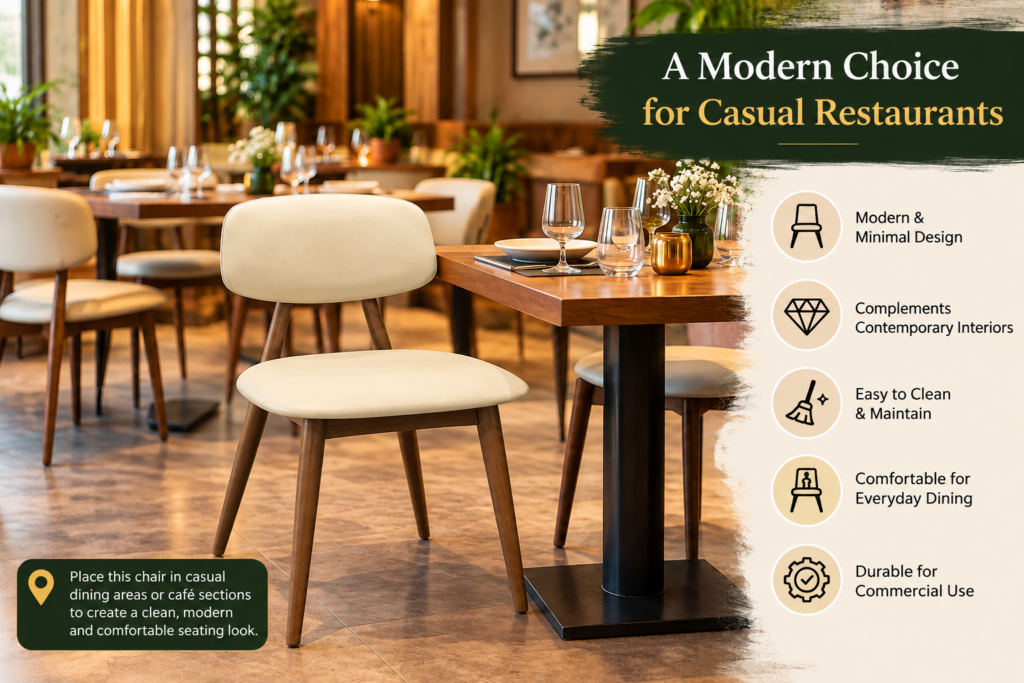
Customers may come for lunch with colleagues, dinner with family or a quick meal with friends. The furniture therefore needs to handle regular use while maintaining its appearance.
Popular restaurant interior seating ideas for casual restaurants include:
- Stackable chairs
- Lightweight chairs
- Modern plastic or polypropylene chairs
- Metal-frame chairs
- Wooden-look chairs
- Simple cushioned dining chairs
The advantage of practical commercial seating is that restaurant staff can move and rearrange tables when required.
For busy restaurants, stackable chairs can also help during cleaning, maintenance or changes in seating arrangements.
4. Your Seating Should Match Your Brand Personality
Think of your restaurant as a person.
Is it elegant? Young? Traditional? Creative? Comfortable? Premium?
Your furniture should communicate the same personality.
For example:
Luxury restaurant:
Choose sophisticated upholstery, premium finishes and elegant silhouettes.
Modern cafe:
Choose clean lines, contemporary colors and lightweight designs.
Family restaurant:
Focus on comfortable, durable and easy-to-maintain chairs.
Traditional restaurant:
Wooden finishes and classic chair designs can complement the overall theme.
Trendy restaurant:
Bold colors, distinctive shapes and statement chairs can make the space more memorable.
This is why seating should be included early in the interior planning process rather than selected at the end.
5. Should Restaurant Chairs Match the Table Style?
Yes-but they do not necessarily have to be identical.
The chairs and tables should look visually connected in terms of color, material, proportions and overall style.
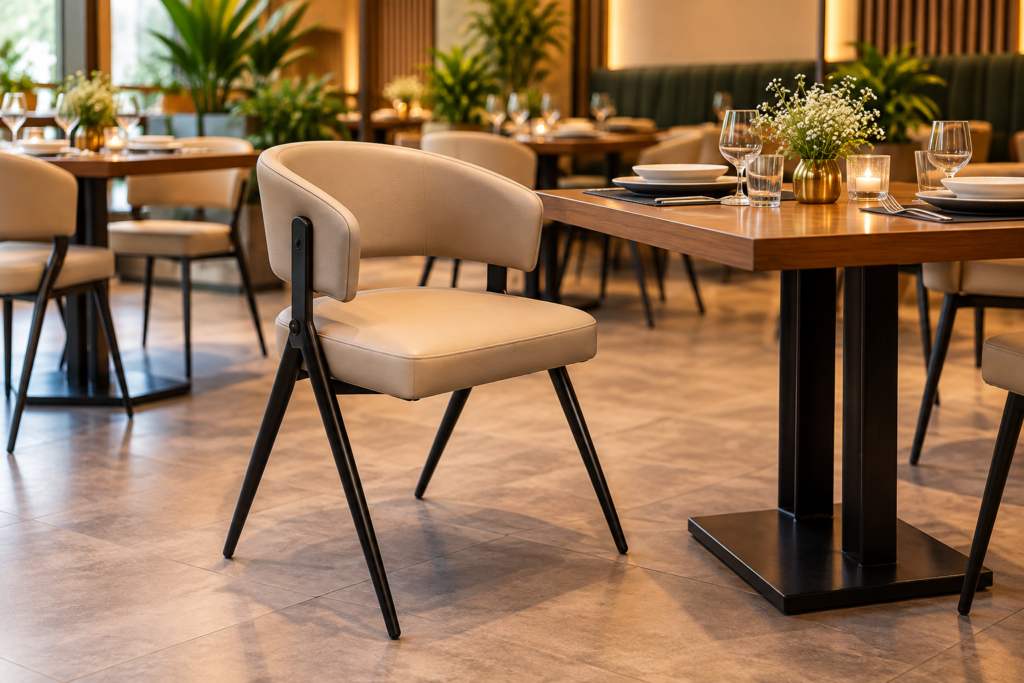
For example, a wooden dining table can work well with wooden chairs or chairs that have a complementary finish. A modern black table may pair well with contemporary chairs featuring black metal frames.
However, using exactly the same material everywhere is not always necessary.
Sometimes contrast creates a better interior.
A wooden table with upholstered chairs can make a restaurant feel warmer and more premium. Similarly, a simple table paired with a designer chair can create a modern focal point.
The important thing is visual balance.
6. Comfort Can Influence How Long Customers Stay
One of the biggest mistakes restaurant owners make is choosing chairs based only on appearance.
A beautiful chair that becomes uncomfortable after 20 minutes can negatively affect the dining experience.
Comfort depends on several factors:
- Seat cushioning
- Back support
- Seat height
- Seat depth
- Chair width
- Backrest shape
- Overall stability
If customers are comfortable, they can enjoy their meal without constantly adjusting their position.
This is especially important for restaurants where customers typically spend longer periods dining.
So, when considering how seating style affects restaurant customer experience in India, comfort should be treated as an important part of the overall experience—not an optional feature.
7. Think About Restaurant Traffic Before Choosing Chairs
Not every attractive chair is suitable for every restaurant.
A busy restaurant may need chairs that can handle frequent daily use. A premium restaurant may place greater emphasis on upholstery and appearance, while a cafe may prioritize lightweight and easy-to-move furniture.
Before purchasing, consider:
Daily usage:
How many customers will use each chair every day?
Maintenance:
Is the material easy to clean?
Space:
Can customers and staff move comfortably between tables?
Durability:
Can the chair withstand regular commercial use?
Storage:
Can chairs be stacked or moved when required?
Cleaning:
Will the material remain practical in a busy food environment?
These practical questions can prevent expensive furniture mistakes later.
8. Create Different Seating Zones
Another useful restaurant interior design idea is to avoid making every seating area look exactly the same.
You can create different zones according to customer requirements.
For example:
- Standard dining chairs for regular tables
- Lounge seating for relaxed conversations
- Bar stools near counters
- Larger tables for families or groups
- Outdoor chairs for open seating areas
This approach can make a restaurant more functional while giving customers different seating experiences.
Creative Seating offers multiple commercial seating categories, including cafe and dining chairs, bar stools and outdoor chairs, making it possible to plan seating according to different areas and usage requirements.
9. Choose Commercial Seating, Not Just Residential Furniture
Restaurant furniture experiences much more daily use than furniture in a typical home.
Chairs are constantly pulled, moved, cleaned and occupied by different customers.
Therefore, restaurant owners should consider commercial-grade furniture designed for regular use.
Look at:
- Frame construction
- Material quality
- Upholstery
- Finish
- Weight capacity
- Maintenance requirements
- Availability of replacement or service support
A slightly higher initial investment in suitable commercial seating can be more practical than repeatedly replacing low-quality chairs.
Creative Seating’s website specifically positions its furniture around commercial-grade use, durable materials, bulk orders, pan-India delivery and custom furniture options.
10. The Right Seating Helps Tell Your Restaurant’s Story
Your menu tells customers what you serve.
Your logo tells them who you are.
Your seating helps tell them how you want them to feel.
That is why restaurant seating deserves the same attention as lighting, wall decor and tables when planning an interior.
Whether you are designing a premium dining space, a modern cafe, a family restaurant or a busy commercial food outlet, choose chairs that balance style, comfort, durability and practicality.
The best dining chair styles for fine dining vs casual restaurants may be very different, but both should support the restaurant’s brand and customer experience.
Final Thoughts
Good restaurant design is not only about making a space look beautiful. It is about creating an environment where customers feel comfortable and understand what your brand represents.
The right restaurant interior design seating can make your space feel premium, welcoming, modern or casual. More importantly, comfortable and practical chairs can contribute to a better overall dining experience.
Before buying restaurant chairs, look at your restaurant’s concept, customer profile, available space, expected footfall and maintenance requirements.
At Creative Seating, you can explore a wide range of cafe and dining chairs, restaurant chairs, bar stools and other commercial seating solutions designed for different business environments.
Choose seating that does more than fill your restaurant. Choose seating that tells your customers who you are.
Frequently Asked Questions
How does seating style influence restaurant branding?
Seating contributes to the visual identity and atmosphere of a restaurant. Elegant chairs can communicate a premium image, while colorful or minimalist chairs can create a modern and casual personality. The right seating should support the restaurant’s overall theme, colors and customer experience.
Should restaurant chairs match the table style?
Restaurant chairs do not have to exactly match the tables. However, their colors, materials, proportions and overall design should work together. A well-planned contrast between tables and chairs can also create an attractive interior.
Does chair comfort affect how long customers stay?
Yes. Comfortable seating can make customers more willing to spend additional time dining, talking or relaxing. For restaurants where customers typically have longer meals, proper cushioning, back support, seat height and chair dimensions are particularly important.