Currently Empty: ₹0.00


Choosing the right chairs is an important part of creating a comfortable and productive learning environment. Students spend several hours sitting in classrooms, lecture halls, laboratories, libraries, and training rooms. Uncomfortable or poorly designed chairs can affect their posture, concentration, and overall classroom experience.
For schools, colleges, and educational institutions, the challenge is to find seating that is comfortable, durable, easy to maintain, and suitable for daily use. When purchasing in bulk, institutions must also consider available space, student age groups, maintenance costs, and long-term value.
This guide explains how to choose the right school and college furniture based on practical requirements.
1. Choose Chairs According to the Age Group
One of the first things to consider when selecting school chairs is the age and height of the students. A chair that works well for a college student may not be suitable for a primary school child.
For primary schools, choose lightweight chairs with appropriate seat heights, stable legs, and smooth edges. Students should be able to sit comfortably with their feet supported and their backs properly positioned.
For secondary schools, chairs should offer sufficient seating space and withstand frequent daily use. In colleges and universities, adult-sized chairs with supportive backrests and sturdy frames are generally more suitable.
Before placing a bulk order, measure the desks and available classroom space. The chair height should allow students to sit comfortably without raising their shoulders or bending excessively over their desks.
2. Select the Right Chair Material
The material affects a chair’s durability, maintenance requirements, weight, and overall cost. When comparing school chairs India suppliers offer, consider how frequently the chairs will be used and the conditions in which they will be placed.
Plastic chairs: These are lightweight, easy to clean, and convenient to move. They are suitable for many classrooms, activity rooms, and multipurpose spaces. Choose good-quality plastic chairs with stable legs and an appropriate load capacity.
Metal chairs: Metal-framed chairs are suitable for institutions that require a sturdy seating solution. Steel frames can provide good structural strength when properly designed and finished. Check the quality of joints, protective coating, and resistance to rust.
Wooden or plywood chairs: These can work well in libraries, study areas, and selected classroom environments. Their suitability depends on the construction quality, surface finish, and maintenance requirements.
Cushioned chairs: These may be appropriate for faculty rooms, seminar spaces, and specialized training rooms where users sit for longer periods. However, fabric or upholstered surfaces may require more cleaning than plastic or metal seating.
The best choice depends on the intended use, budget, expected lifespan, and maintenance arrangements.
3. Prioritize Comfort and Ergonomic Design
Students may spend several hours attending classes, taking notes, or completing examinations. Therefore, comfort should be a key consideration when selecting institutional seating.
Look for chairs with a supportive backrest, sufficient seat width, suitable seat depth, and a stable base. The seat should not press uncomfortably against the back of the knees, and students should be able to maintain a natural sitting posture.
For lecture halls and computer classrooms, consider how students will use the desks. Chairs must provide enough space for writing, reading, and using laptops where required.
Whenever possible, test sample chairs before purchasing them in bulk. Ask students or staff to sit on them for a reasonable period and check whether the seating feels comfortable and practical.
4. Consider Different Seating Needs Across the Campus
Not every educational space requires the same type of chair. Selecting seating according to the room’s purpose helps institutions use their budgets more effectively.
- Classrooms: Choose durable, easy-to-clean chairs that work well with classroom desks.
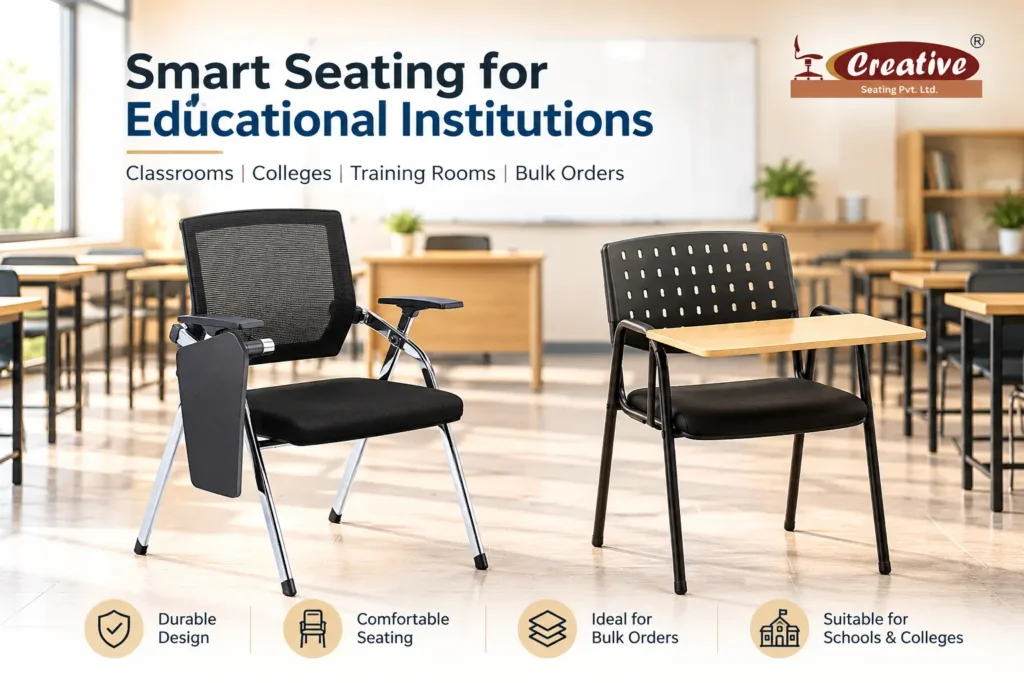
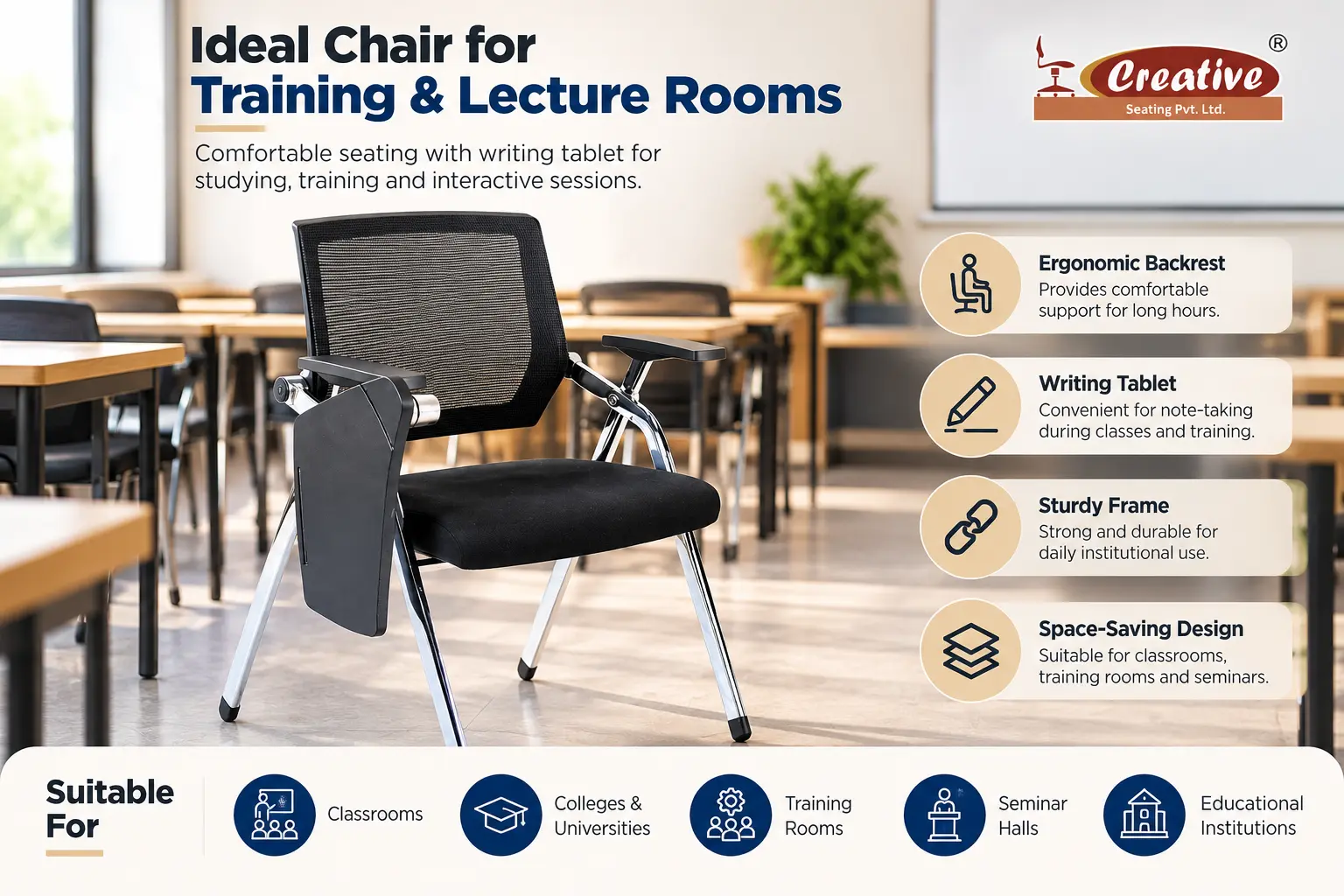
- Lecture halls: Consider compact chairs or writing-tablet chairs that support note-taking while making efficient use of floor space.
- Libraries: Select comfortable chairs suitable for reading and individual study.
- Computer laboratories: Check desk height, legroom, and clearance for computer equipment.
- Training rooms: Stackable or movable training chairs can help staff rearrange rooms for workshops and group activities.
- Staff rooms and seminar halls: Chairs with additional back support may be more appropriate for longer meetings.
The right college furniture should support the daily activities of students, teachers, and administrative staff without creating unnecessary maintenance or storage problems.
5. Check Durability Before Placing a Bulk Order
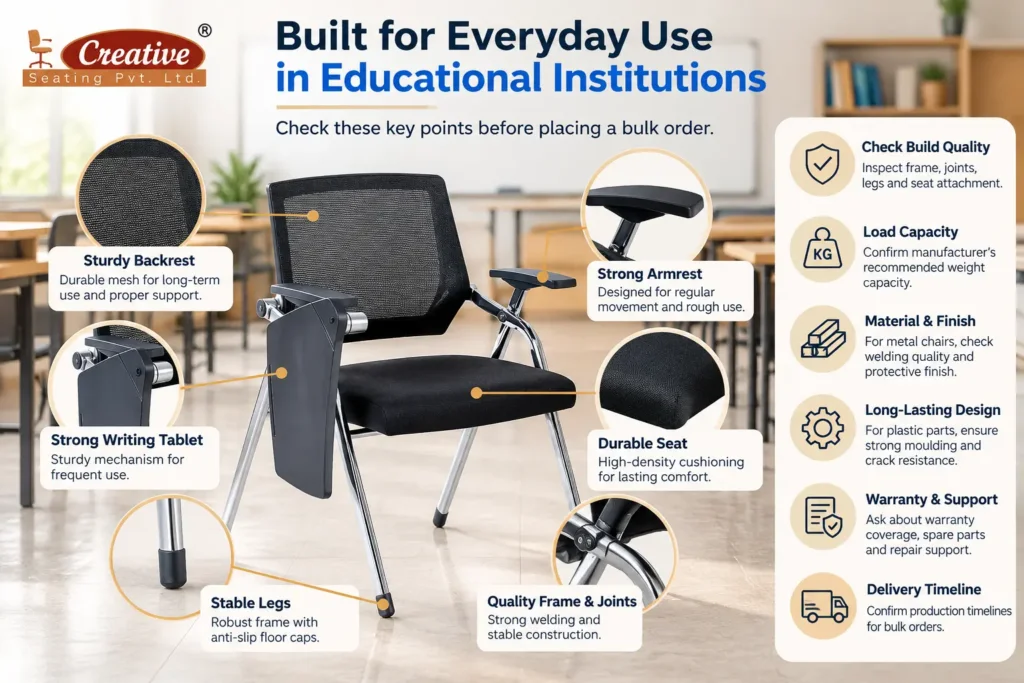
Educational furniture experiences regular use, frequent movement, and occasional rough handling. A chair that looks attractive in a catalog may not necessarily withstand years of classroom use.
When evaluating durable chairs for schools and colleges in India bulk order requirements, inspect the frame, joints, legs, seat attachment, and overall stability. Check the manufacturer’s recommended load capacity and whether the product has been tested for its intended use.
For metal chairs, examine the welding quality and protective finish. For plastic chairs, look for consistent molding, stable construction, and resistance to cracking under normal use.
Also ask about warranty coverage, spare parts, repair support, and expected delivery timelines. A slightly higher initial price may offer better long-term value if the chair lasts longer and requires fewer repairs.
6. Compare Fixed, Stackable, and Training Chairs
The available space and classroom arrangement should influence your seating decision.
Fixed chairs can be suitable for permanent classroom layouts. Stackable chairs are useful when rooms need to be cleared for examinations, events, or other activities. Training chairs are practical for coaching centres, workshops, computer training rooms, and flexible learning spaces.
Before choosing stackable chairs, check how securely they stack and how much storage space they require. For training rooms, consider chairs that are easy to move without being too lightweight or unstable during use.
For institutions with limited space, measuring the room and testing a sample arrangement can prevent overcrowding and improve movement between desks.
7. Plan Bulk Purchases Carefully
Buying chairs in bulk can simplify procurement, but the decision should involve more than comparing the price per unit.
Start by preparing a room-wise requirement list. Include the number of classrooms, students per room, faculty seating, laboratory requirements, and a small reserve for replacement needs.
Next, request quotations from multiple suppliers. Compare product specifications, materials, warranty terms, transportation charges, taxes, installation requirements where applicable, and delivery schedules.
Ask for product samples or a demonstration before confirming a large order. Verify whether the supplier can maintain consistent quality across the entire quantity and deliver the chairs according to the institution’s academic calendar.
Institutions ordering school and college furniture should also confirm whether custom colors, branding, or different chair sizes are available. Get all agreed specifications in writing to avoid confusion during delivery.
8. Can Chairs Be Customized for Educational Institutions?
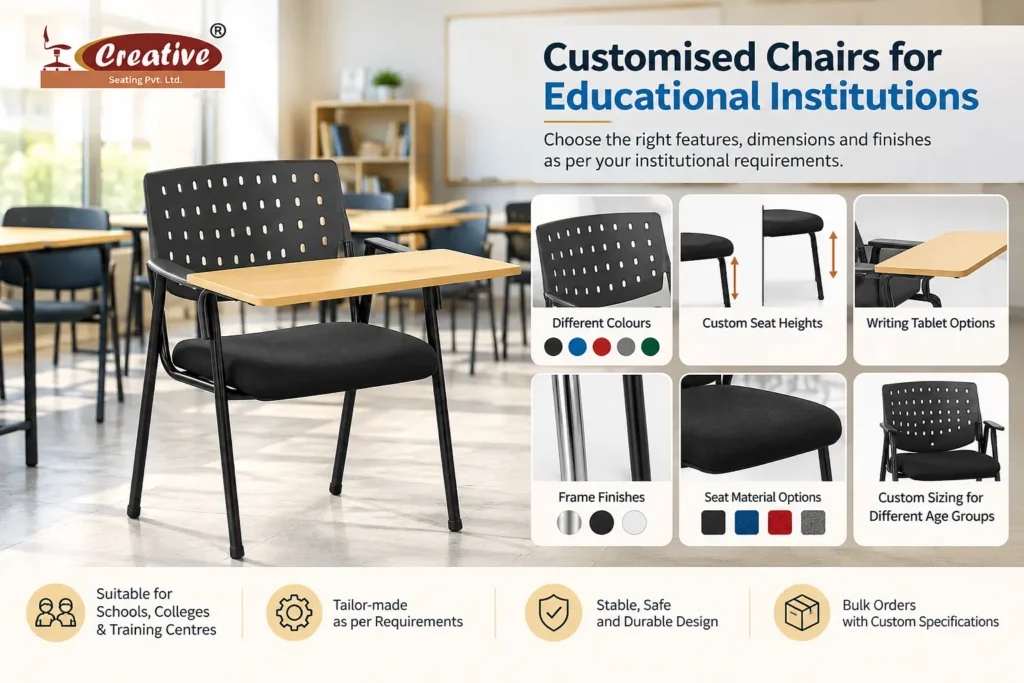
Yes, some manufacturers offer customized seating according to institutional requirements. Options may include different seat heights, colors, frame finishes, writing tablets, or other product features, depending on the model.
Custom sizing is particularly useful for schools with younger children. However, the dimensions should be selected according to the students’ age and height rather than appearance alone.
Before approving a customized order, request dimension drawings, sample specifications, minimum order quantities, production timelines, and pricing. Confirm that the proposed design remains stable, safe, and suitable for its intended use.
Frequently Asked Questions
What type of chairs are best for school classrooms?
The best chairs are stable, appropriately sized for students, comfortable, easy to clean, and durable enough for daily use. Primary schools should pay particular attention to seat height and smooth edges, while older students may need larger seating with supportive backrests.
Are plastic chairs or metal chairs better for college use?
Both can be suitable. Plastic chairs are generally lightweight and easy to maintain, while metal-framed chairs can offer a sturdy construction. The better option depends on the design, material quality, classroom requirements, expected usage, and budget.
Can I get chairs custom sized for children in schools?
Yes, some manufacturers offer chairs in different sizes or customized dimensions. Availability depends on the product and order quantity. Share the students’ age groups, desk heights, and seating requirements with the supplier before finalizing your order.
Conclusion
Choosing the right chairs for educational institutions requires careful consideration of comfort, material quality, durability, space, and budget. From primary school classrooms to college lecture halls and training centres, each environment has different seating requirements.
By evaluating chair dimensions, testing samples, comparing suppliers, and planning quantities in advance, institutions can make more informed purchasing decisions.
If you are planning to upgrade your classroom seating or purchase school and college furniture in bulk, explore suitable options from Creative Seating. Choose seating solutions that match your institution’s practical needs and support a comfortable learning environment for students and teachers.