
Currently Empty: ₹0.00

Spills are a normal part of everyday dining. Whether it is a coffee spill in a restaurant, a sauce stain at a café, or food marks on dining chairs at home, upholstered chairs can easily become dirty with regular use.
The problem is that fresh stains can become difficult to remove when they are left unattended. Food, beverages, oil, and other liquids can soak into the cushion fabric, leaving behind marks, unpleasant smells, or discolouration.
Knowing how to remove food stains from upholstered chairs can help maintain their appearance and extend their usability. With the right cleaning method and a few simple precautions, you can handle most fresh stains without damaging the upholstery.
In this guide, we will cover practical methods for restaurant chair stain removal, cushion cleaning, and everyday upholstered dining chair care.
Why Should You Clean Upholstery Stains Immediately?
When liquid spills onto an upholstered chair, it can quickly spread through the fabric and reach the cushioning underneath. The longer it stays, the harder it may become to remove.
Regular and timely cleaning helps:
- Prevent permanent stains and discolouration.
- Reduce unpleasant food and beverage odours.
- Maintain the original appearance of chair upholstery.
- Keep restaurant and café seating presentable.
- Reduce the need for frequent professional cleaning.
For restaurants and cafés, quick cleaning is especially important because chairs are used by multiple customers throughout the day.
How to Remove Food Stains from Upholstered Chairs
Different stains require slightly different cleaning methods. However, the first step is always to act quickly and avoid spreading the stain.
Follow these practical steps to clean fresh spills safely.
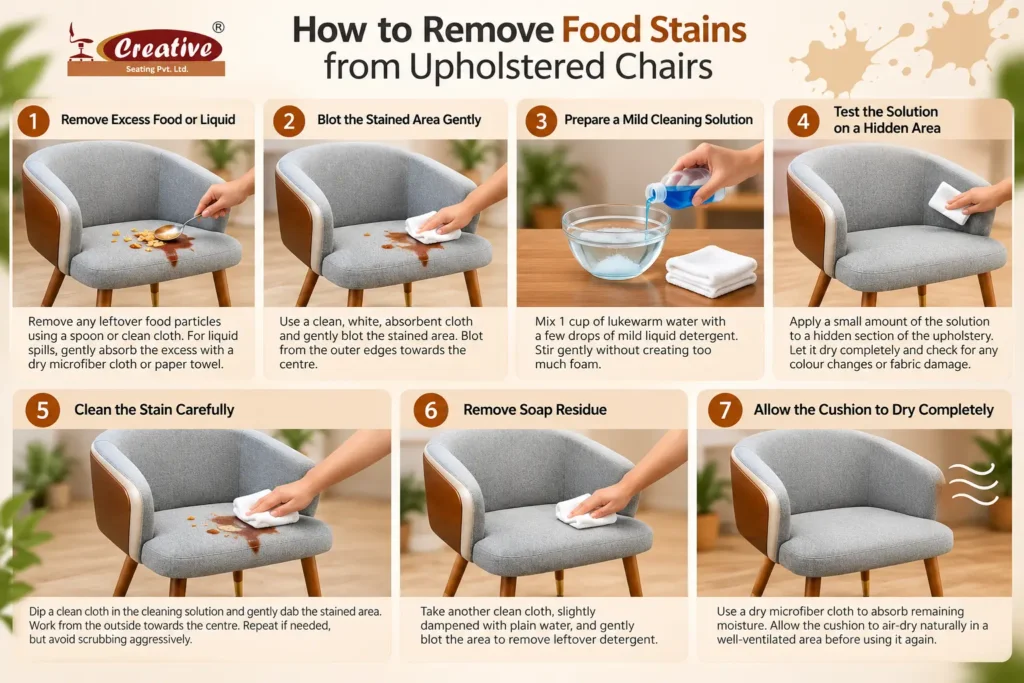
Step 1: Remove Excess Food or Liquid
As soon as a spill happens, remove any leftover food particles using a spoon or a clean, soft cloth.
For liquid spills such as coffee, juice, or cold drinks, use a clean, dry microfiber cloth or paper towel to absorb the excess liquid.
Practical tip: Do not press too hard while removing the spill. Excessive pressure can push the liquid deeper into the cushion.
Step 2: Blot the Stained Area Gently
Take a clean, white, absorbent cloth and gently press it against the stained area.
Blot from the outer edges towards the centre. This helps prevent the stain from spreading to the surrounding fabric.
Repeat the process with a clean section of the cloth until most of the liquid has been absorbed.
Remember: Always blot instead of rubbing. Rubbing can damage fabric fibres and spread the stain further.
Step 3: Prepare a Mild Cleaning Solution
For many washable upholstery fabrics, a mild cleaning solution can help remove fresh stains.
You can prepare one using:
- 1 cup of lukewarm water.
- A few drops of mild liquid detergent.
Mix the solution gently without creating too much foam.
Before applying it to the stain, check the chair manufacturer’s cleaning instructions. Some upholstery materials require special cleaning products or professional care.
Step 4: Test the Solution on a Hidden Area
Before cleaning the visible stain, test the solution on a small, hidden section of the upholstery.
Apply a little solution using a clean white cloth and gently dab the area.
Wait until the tested section dries completely. Check for colour changes, watermarks, fabric damage, or discolouration.
If the fabric shows any unwanted change, stop using the solution.
Practical tip: Never pour cleaning liquid directly onto the chair cushion. Always apply a small amount through a cloth.
Step 5: Clean the Stain Carefully
If the test is successful, gently dab the stained area with the damp cloth.
Work from the outside towards the centre and avoid soaking the fabric.
For stubborn food marks, repeat the process slowly rather than scrubbing aggressively.
Do not use excessive water, as moisture can reach the inner foam and take longer to dry.
Step 6: Remove Soap Residue
Take another clean cloth, slightly dampened with plain water, and gently blot the cleaned area.
This helps remove leftover detergent from the upholstery.
Avoid leaving soap residue behind because it can attract dust and make the fabric look dirty again.
Step 7: Allow the Cushion to Dry Completely
Use a dry microfiber cloth to absorb remaining moisture.
Allow the chair to air-dry naturally in a well-ventilated area before using it again.
Avoid direct heat, hair dryers, or strong sunlight unless the upholstery manufacturer’s instructions permit them.
For restaurants and cafés, make sure the cushion is completely dry before placing the chair back into regular use.
How to Handle Common Restaurant Chair Stains
Different spills need different approaches. Here are some practical cleaning suggestions for common restaurant and café stains.
| Type of stain | Recommended cleaning approach |
|---|---|
| Tea and coffee | Blot immediately, then gently dab with a suitable mild cleaning solution. |
| Food and sauce | Remove solid particles first, then spot-clean the remaining mark. |
| Cold drinks and juice | Absorb excess liquid and clean gently with a suitable solution. |
| Grease and oil | Lift excess oil carefully without rubbing. Use an upholstery-safe cleaner recommended for the fabric. |
| Chocolate | Remove excess chocolate gently and treat the remaining mark according to the fabric care instructions. |
Important: These methods are intended for suitable washable upholstery. Always follow the manufacturer’s care instructions. Avoid using bleach, harsh chemicals, or untested stain removers.
How to Clean Restaurant Chair Cushions During Daily Use
Restaurant chairs experience more frequent use than ordinary household furniture. Customers may accidentally spill food, drinks, or sauces during meals.
A simple daily maintenance routine can help keep the seating area clean and presentable.
1. Check chairs between customers: Quickly inspect the seat and backrest for visible food marks, liquid spills, and dirt.
2. Remove loose dirt: Use a soft brush or vacuum cleaner with a suitable upholstery attachment to remove crumbs and dust.
3. Spot-clean fresh stains: Attend to small spills immediately using the appropriate cleaning method.
4. Avoid excessive moisture: Do not soak the cushion while cleaning. Excess moisture may affect the inner cushioning and increase drying time.
5. Allow proper drying: Ensure cleaned chairs are completely dry before customers use them again.
Following these steps regularly makes cushion cleaning easier and reduces the chances of stains building up over time.
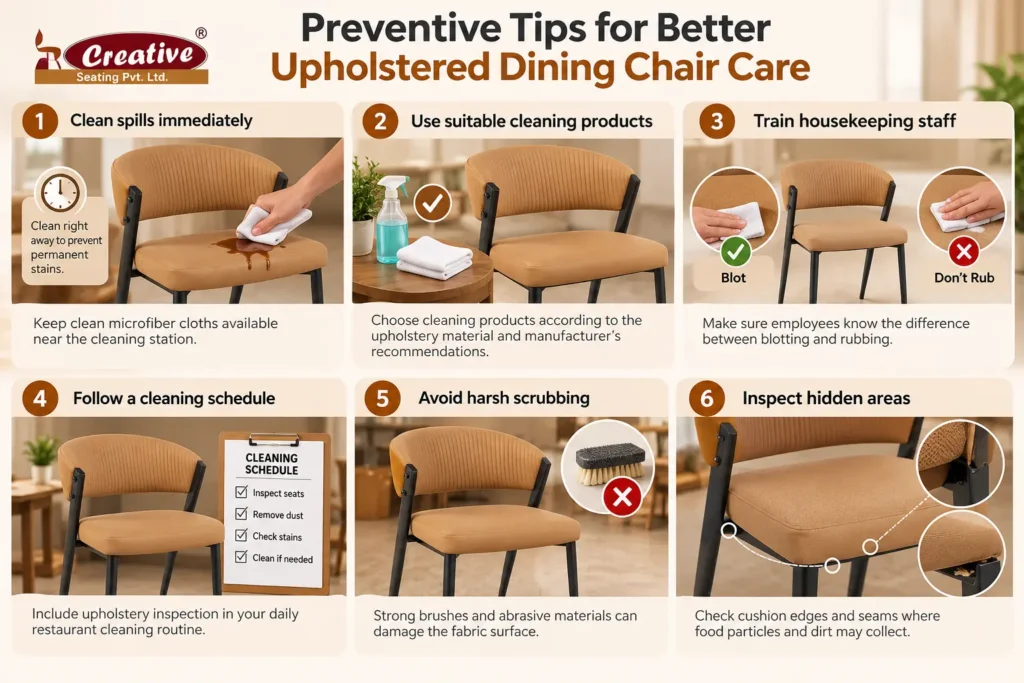
Preventive Tips for Better Upholstered Dining Chair Care
Cleaning stains is important, but preventing them from becoming permanent is equally useful.
Here are a few simple habits that can make upholstery maintenance easier:
- Clean spills immediately: Keep clean microfiber cloths available near the cleaning station.
- Use suitable cleaning products: Choose products according to the upholstery material and manufacturer’s recommendations.
- Train housekeeping staff: Make sure employees know the difference between blotting and rubbing.
- Follow a cleaning schedule: Include upholstery inspection in your daily restaurant cleaning routine.
- Avoid harsh scrubbing: Strong brushes and abrasive materials can damage the fabric surface.
- Inspect hidden areas: Check cushion edges and seams where food particles and dirt may collect.
These small steps can help maintain the appearance of upholstered dining chairs, especially in restaurants, cafés, hotels, and banquet spaces.
When Should You Consider Professional Upholstery Cleaning?
Regular spot cleaning is useful for fresh spills and small stains. However, some stains require more attention.
Consider professional upholstery cleaning when:
- Old or dried stains do not respond to suitable spot cleaning.
- Large areas of the cushion are affected.
- Food or liquid has soaked deep into the cushioning.
- Unpleasant odours remain even after surface cleaning.
- The upholstery requires specialised cleaning methods.
Professional cleaners can assess the fabric type and select an appropriate cleaning process. This is particularly helpful for commercial seating that receives heavy daily use.
Frequently Asked Questions (FAQs)
1. Should I blot or rub a fresh stain?
Always blot a fresh stain instead of rubbing it. Blotting absorbs excess liquid without spreading it further. Rubbing can push the stain deeper into the fabric and damage the upholstery fibres.
2. How do I test a cleaning solution?
Apply a small amount of the cleaning solution to a hidden area using a clean white cloth. Allow it to dry completely and check for colour changes, discolouration, or fabric damage before using it on the visible stain.
3. When should professional cleaning be considered?
Professional cleaning should be considered when stains are old, deeply absorbed, spread across large areas, or accompanied by unpleasant odours. It is also recommended when the upholstery requires specialised care.
Final Thoughts
Spills are unavoidable in restaurants, cafés, hotels, and everyday dining spaces. However, a fresh stain does not always have to become a permanent mark.
The key is to act quickly, remove excess food or liquid, blot gently, use suitable cleaning solutions, and allow the cushion to dry completely.
Following a regular upholstered dining chair care routine helps maintain clean, attractive, and comfortable seating for customers and guests.
At Creative Seating, we understand the importance of practical and well-maintained seating for commercial spaces. Choosing suitable chairs and following the correct maintenance practices can help keep your furniture looking presentable for longer.

