
Currently Empty: ₹0.00

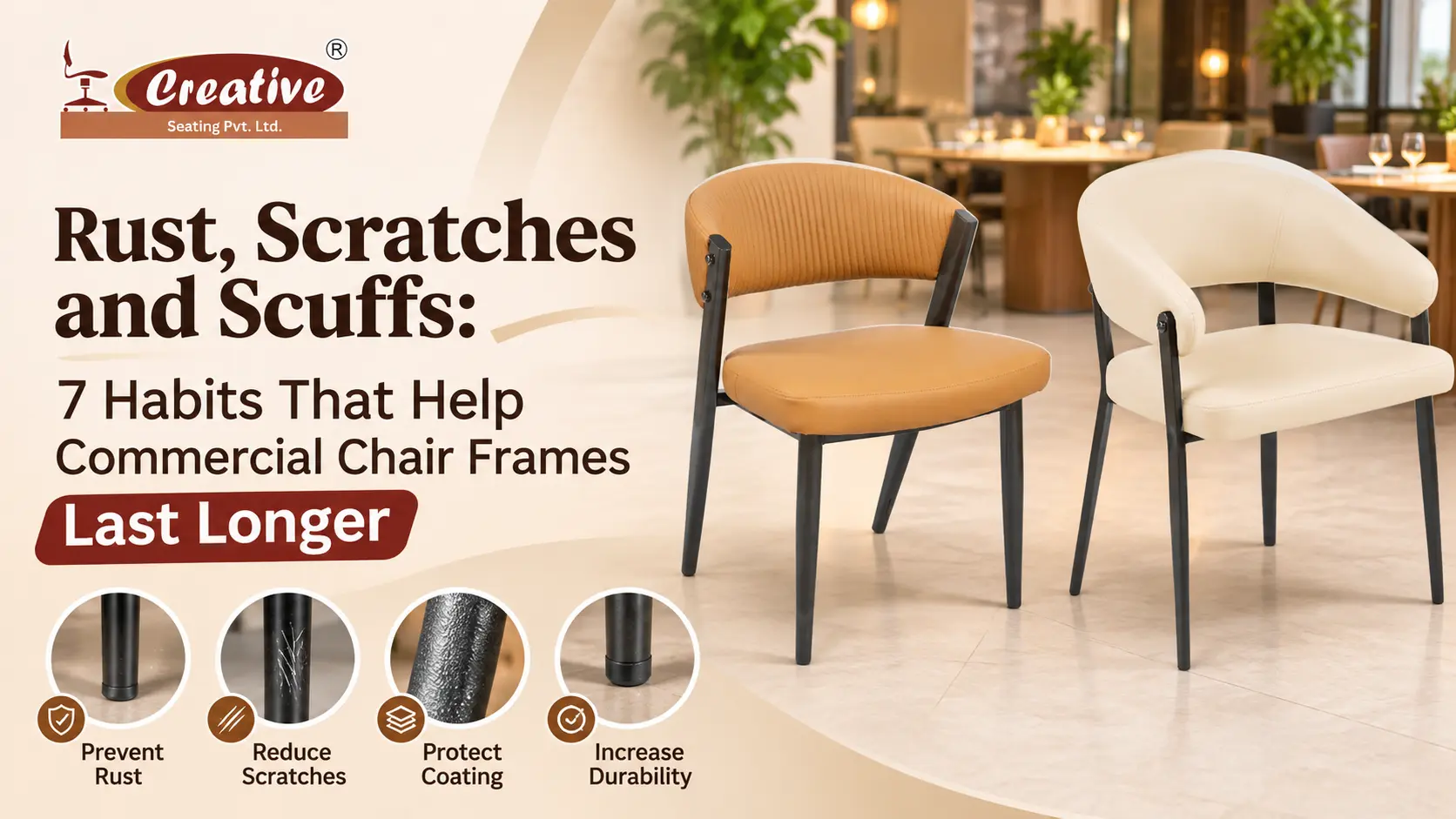
Chairs are used continuously in restaurants, cafés, hotels and other commercial spaces. Customers sit on them, staff move them for cleaning, and housekeeping teams wipe them several times a day. With regular use, small scratches, scuff marks and rust spots can start appearing on chair frames.
This is especially common with metal-frame restaurant chairs and dining chairs that are moved frequently. Even powder-coated steel legs can lose their protective finish if they are not handled and maintained properly.
The good news is that you don’t need expensive products or complicated cleaning methods to maintain commercial chairs. A few simple habits can help protect their frames and keep them looking good for longer.
In this blog, we will discuss 7 practical habits to prevent rust on metal chair legs, reduce scratches and make everyday chair maintenance easier.
Why Is Commercial Chair Frame Maintenance Important?
In a busy restaurant, chairs are moved many times throughout the day. They may come into contact with wet floors, cleaning liquids, food spills and other furniture.
Over time, these activities can damage the chair’s surface finish.
Regular metal chair frame care helps you:
- Reduce scratches and scuff marks.
- Protect the powder-coated finish.
- Identify rust before it spreads.
- Maintain the appearance of restaurant and dining chairs.
- Reduce avoidable repair and replacement expenses.
Let’s look at seven easy habits that your housekeeping team can follow.
1. Lift Chairs Instead of Dragging Them
Think about your restaurant’s closing routine. Staff move chairs away from tables to clean the floor. Many people pull chairs instead of lifting them.
This small habit can cause scratches on metal legs, especially when chairs are moved across rough tiles or concrete floors.
Repeated dragging can also damage the protective coating on powder-coated steel legs.
Activity: Try This in Your Restaurant
- Ask staff to lift chairs slightly before moving them.
- Avoid pulling chairs across rough flooring.
- Keep chairs away from sharp furniture edges.
- Check whether the chair legs are rubbing against other chairs.
Practical Tip: Use suitable floor-protective glides on chair legs. Replace missing or damaged glides to reduce friction and protect both the chair frame and flooring.
2. Inspect Chair Frames Once Every Week
Small scratches may not look serious initially, but ignoring them can lead to bigger problems.
If a scratch damages the protective coating, moisture can reach the exposed metal and increase the risk of rust.
This is why regular inspection is an important part of commercial chair maintenance.
Activity: Follow a 5-Minute Inspection Routine
Once a week, select a few frequently used restaurant chairs and check:
- Lower sections of the metal legs.
- Corners and edges of the frame.
- Areas around welded joints.
- Places where two chairs come into contact.
- Areas near floor glides.
Make a note of any scratches, loose connections or visible rust spots.
Practical Tip: Keep a small maintenance register. Record which chairs need cleaning, repair or further inspection.
3. Keep Metal Chair Legs Dry After Cleaning
Water and moisture are common reasons for rust formation on metal surfaces.
In restaurants and cafés, water from floor cleaning, beverage spills and regular housekeeping can collect around chair legs.
If the protective coating is already damaged, moisture can increase the chances of corrosion.
Activity: Follow This Simple Cleaning Method
- Remove loose dust using a dry microfiber cloth.
- Clean the frame with a soft cloth and mild soapy water.
- Wipe away soap residue with a slightly damp cloth.
- Dry the complete frame using a clean cloth.
- Pay special attention to corners, joints and the bottom of the legs.
Practical Tip: Never leave metal chairs standing on wet floors for long periods. Allow the floor to dry before placing the chairs back.
This simple habit is useful for restaurant chairs, hotel dining chairs and outdoor seating.
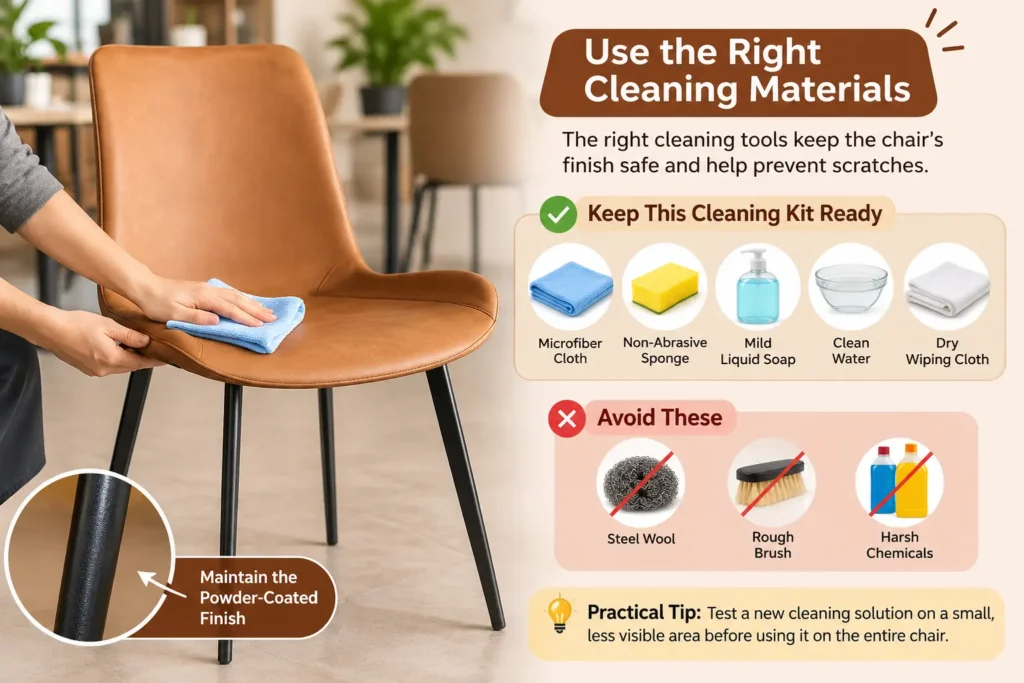
4. Use the Right Cleaning Materials
Using the wrong cleaning products can damage the finish of a chair frame.
Strong chemicals, steel wool, rough brushes and abrasive scrubbers may leave scratches on powder-coated surfaces.
For proper metal chair frame care, always choose gentle cleaning materials.
Activity: Prepare a Small Cleaning Kit
Keep these items ready for your housekeeping team:
- Soft microfiber cloth.
- Non-abrasive sponge.
- Mild liquid soap.
- Clean water.
- Dry wiping cloth.
Avoid harsh chemicals and abrasive cleaning pads unless they are specifically approved for the chair’s finish.
Practical Tip: Before using a new cleaning solution on the entire frame, test it on a small, less visible area. Always follow the manufacturer’s cleaning instructions.
5. Check the Powder Coating Before Rust Appears
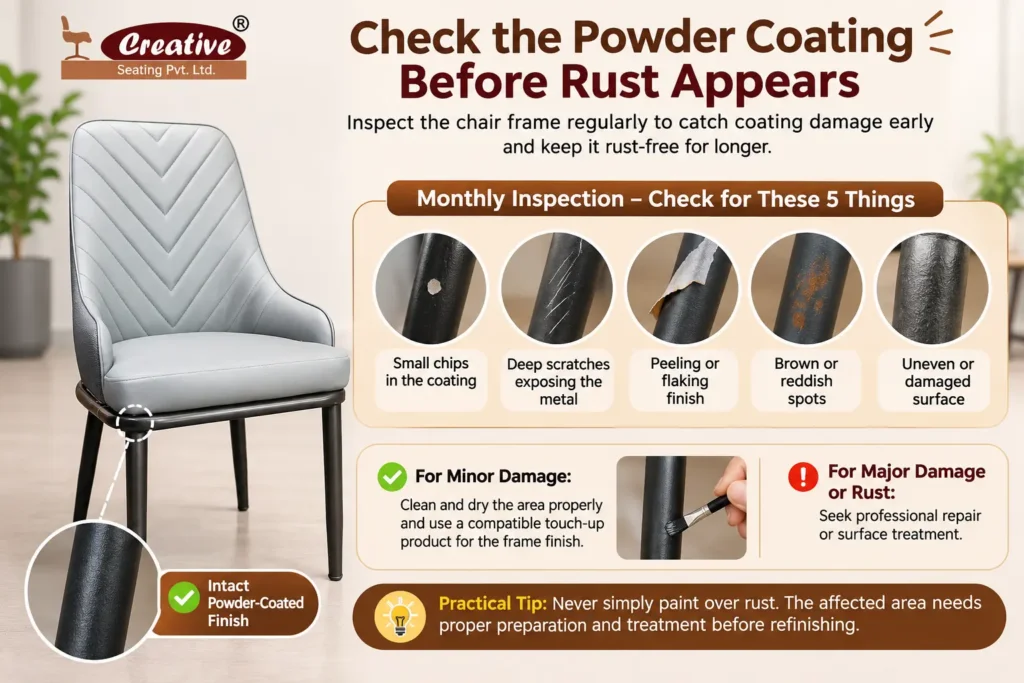
Powder coating provides a protective finish over metal chair frames. However, regular friction, accidental impacts and rough handling can damage this layer.
Knowing how to inspect chair frame coating helps identify problems early.
Activity: Check These 5 Things During Monthly Maintenance
- Small chips in the coating.
- Deep scratches exposing the metal underneath.
- Peeling or flaking finish.
- Brown or reddish spots.
- Uneven or damaged surface areas.
If you find a small damaged area, clean and dry it properly. Use a compatible touch-up product recommended for the particular frame finish.
For larger damaged areas or existing corrosion, professional repair may be necessary.
Practical Tip: Never simply paint over rust. The affected area needs proper preparation and treatment before refinishing.
6. Store and Stack Chairs Carefully
Restaurants, hotels and banquet spaces often rearrange their seating for different activities.
During this process, chairs may be stacked, shifted or stored together. If they are handled carelessly, metal legs can rub against each other and damage the coating.
Activity: Follow These Storage Habits
- Check whether the chair is designed for stacking.
- Follow the recommended stacking limit.
- Avoid forcing chairs into tight spaces.
- Prevent metal legs from repeatedly hitting each other.
- Store unused chairs in a clean, dry and ventilated area.
Practical Tip: Train your staff to handle dining chairs carefully during cleaning, storage and event arrangements.
If you use outdoor chairs, avoid leaving them in standing water for extended periods. Follow the manufacturer’s outdoor-use and storage recommendations.
7. Create a Simple Chair Maintenance Checklist
Good maintenance becomes easier when your entire team follows the same routine.
Instead of waiting for visible damage, include chair inspection in your daily housekeeping schedule.
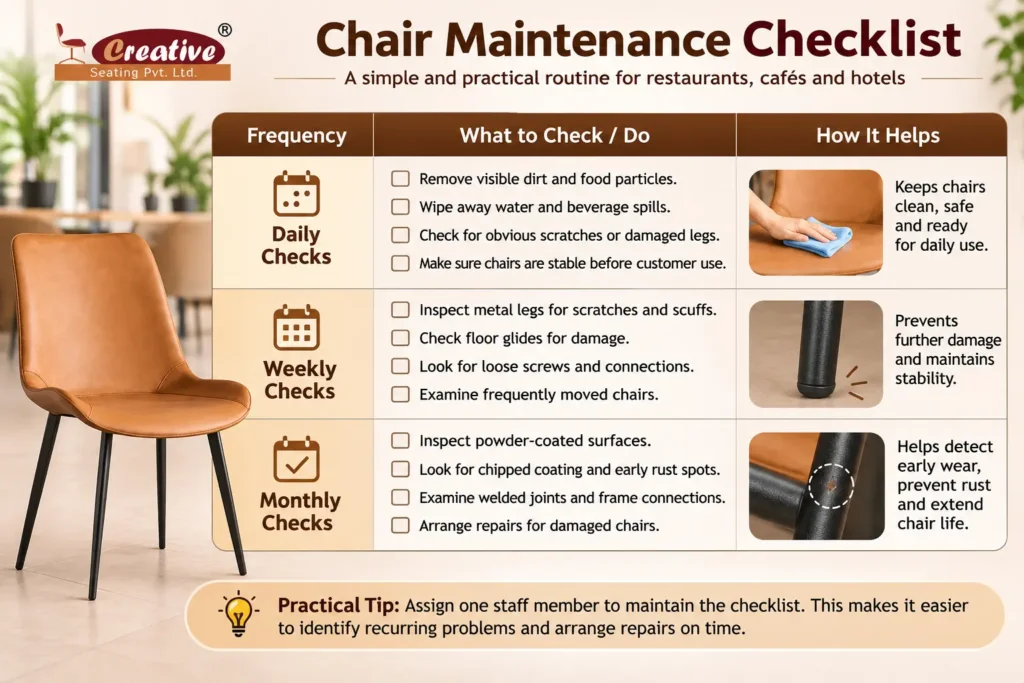
Here is a simple chair maintenance checklist for restaurants.
Daily Checks
- Remove visible dirt and food particles.
- Wipe away water and beverage spills.
- Check for obvious scratches or damaged legs.
- Make sure chairs are stable before customer use.
Weekly Checks
- Inspect metal legs for scratches and scuffs.
- Check floor glides for damage.
- Look for loose screws and connections.
- Examine frequently moved chairs.
Monthly Checks
- Inspect powder-coated surfaces.
- Look for chipped coating and early rust spots.
- Examine welded joints and frame connections.
- Arrange repairs for damaged chairs.
Practical Tip: Assign one staff member to maintain the checklist. This makes it easier to identify recurring problems and arrange repairs on time.
When Should a Damaged Chair Be Taken Out of Use?
Not every scratch means that a chair needs replacement. Minor surface marks can often be handled through suitable maintenance.
However, some types of damage can affect customer safety.
Remove a restaurant chair or dining chair from service immediately if you notice:
- Cracked or broken metal frame sections.
- Deep corrosion affecting structural areas.
- Bent legs that make the chair unstable.
- Damaged welded joints.
- Loose structural connections.
Do not allow customers or staff to use an unstable chair until it has been properly inspected and repaired by a qualified professional.
Conclusion
Commercial chairs go through regular wear and tear, especially in busy restaurants, cafés and hotels. However, small maintenance habits can make a big difference.
Lifting chairs instead of dragging them, keeping metal legs dry, checking the coating and inspecting the frame regularly can help reduce unnecessary damage.
At Creative Seating Pvt. Ltd., we understand the importance of durable and well-designed commercial seating. Whether you are setting up a new restaurant, café or hotel, choosing suitable seating is an important part of creating a comfortable space.
Explore our collection of restaurant chairs, dining chairs, bar stools, outdoor furniture and other commercial seating solutions.
Explore Creative Seating: https://creativeseatings.com/

Frequently Asked Questions (FAQs)
1. What causes rust on metal chair legs?
Rust generally develops when iron or steel comes into contact with moisture and oxygen. Scratches, chipped powder coating, prolonged water exposure and poor maintenance can increase the chances of rust formation.
2. Can a chipped coating lead to rust?
Yes. Powder coating acts as a protective layer over the metal frame. When this coating gets chipped or deeply scratched, the exposed metal may come into contact with moisture and oxygen, increasing the risk of rust.
3. When should a damaged chair be taken out of use?
A chair should be removed from use if it has cracked metal sections, bent legs, damaged welded joints, deep structural corrosion or unstable connections. It should be professionally inspected and repaired before being used again.

