Currently Empty: ₹0.00

Introduction
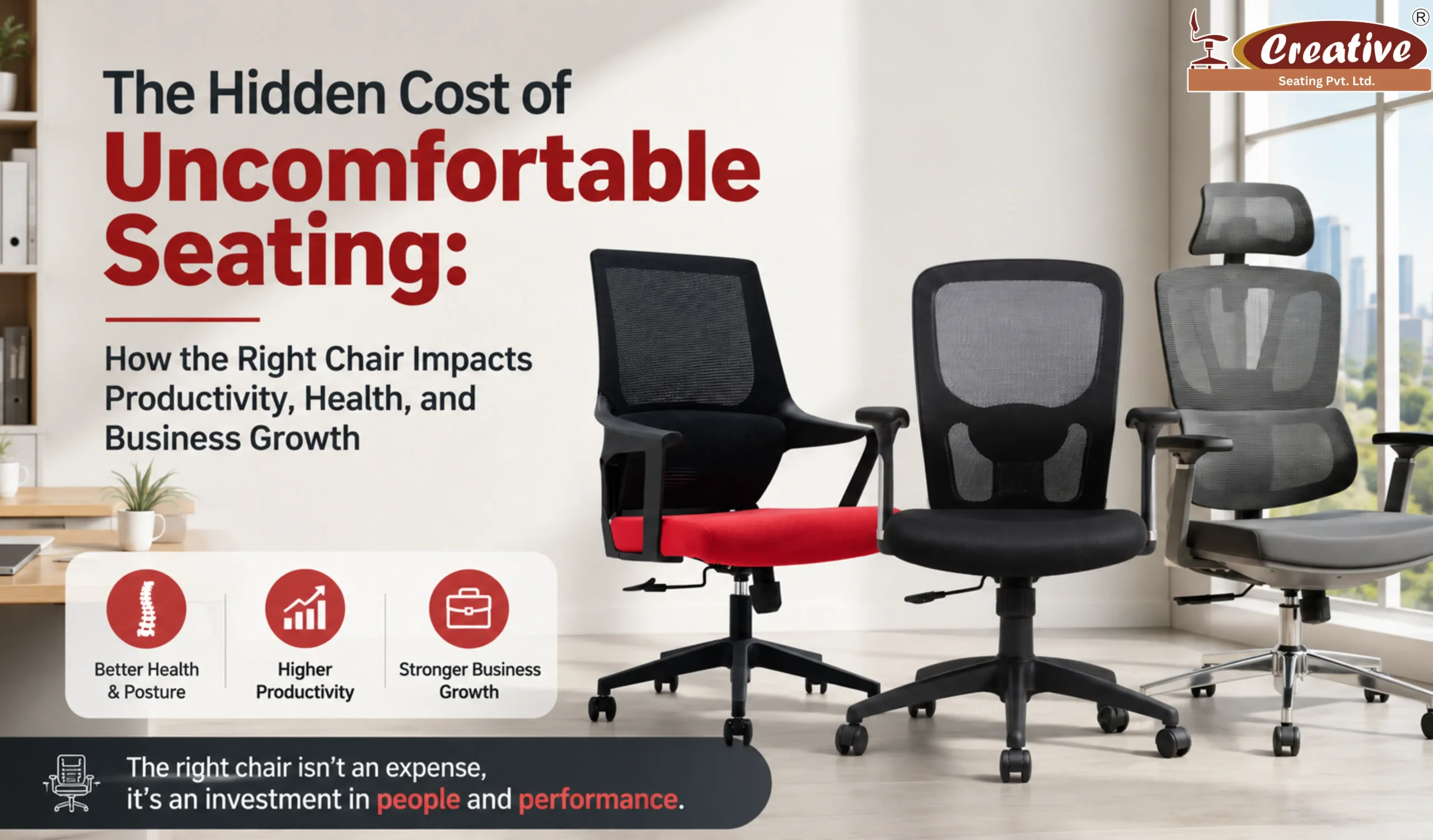
When businesses think about improving productivity, they often focus on technology, training programs, or workplace policies. However, one important factor is frequently overlooked – the chair employees sit in every day.
Whether it is an office, café, restaurant, co-working space, or corporate workspace, seating plays a major role in shaping the overall experience. Many organizations invest heavily in office design but underestimate the impact that comfortable and ergonomic seating can have on employee health, customer satisfaction, and business performance.
Poor seating does not just cause temporary discomfort. Over time, it can lead to health issues, reduced productivity, lower employee morale, and even financial losses. On the other hand, investing in the right seating solutions can create a healthier, happier, and more productive environment.
In this article, we will explore the hidden costs of uncomfortable seating and explain why choosing the right chair is one of the smartest investments a business can make.
Why Seating Matters More Than Most People Realize
Most employees spend between six to eight hours sitting every day. In many workplaces, this number can be even higher. During these long hours, the quality of seating directly affects comfort, concentration, posture, and overall well-being.
A chair is not simply a piece of furniture. It is a tool that supports the human body throughout the workday. When seating is poorly designed, employees may experience discomfort, which gradually affects their performance and health.
For businesses, this can result in decreased productivity, increased absenteeism, and lower job satisfaction.
Comfortable seating is no longer considered a luxury. It has become an essential component of a successful workplace.
The Hidden Health Costs of Poor Seating
1. Back and Neck Pain
One of the most common consequences of uncomfortable seating is back and neck pain. Chairs that lack proper lumbar support force employees to sit in unnatural positions.
Over time, poor posture places excessive strain on the spine, muscles, and joints. Employees may begin experiencing:
- Lower back pain
- Neck stiffness
- Shoulder tension
- Muscle fatigue
These issues can affect both work performance and overall quality of life.
2. Increased Fatigue
When the body is uncomfortable, it uses additional energy to maintain balance and posture. This constant physical strain can make employees feel tired even when performing simple tasks.
Fatigue reduces concentration, slows decision-making, and increases the likelihood of errors.
3. Poor Blood Circulation
Improper seating can restrict blood flow, particularly in the legs and lower body. Employees who sit for extended periods in poorly designed chairs may experience:
- Leg discomfort
- Swelling
- Numbness
- Reduced circulation
These issues can become more serious if ignored over time.
4. Long-Term Health Problems
Continuous use of uncomfortable seating may contribute to chronic musculoskeletal disorders. Businesses that neglect workplace ergonomics often face increased healthcare expenses and employee wellness concerns.
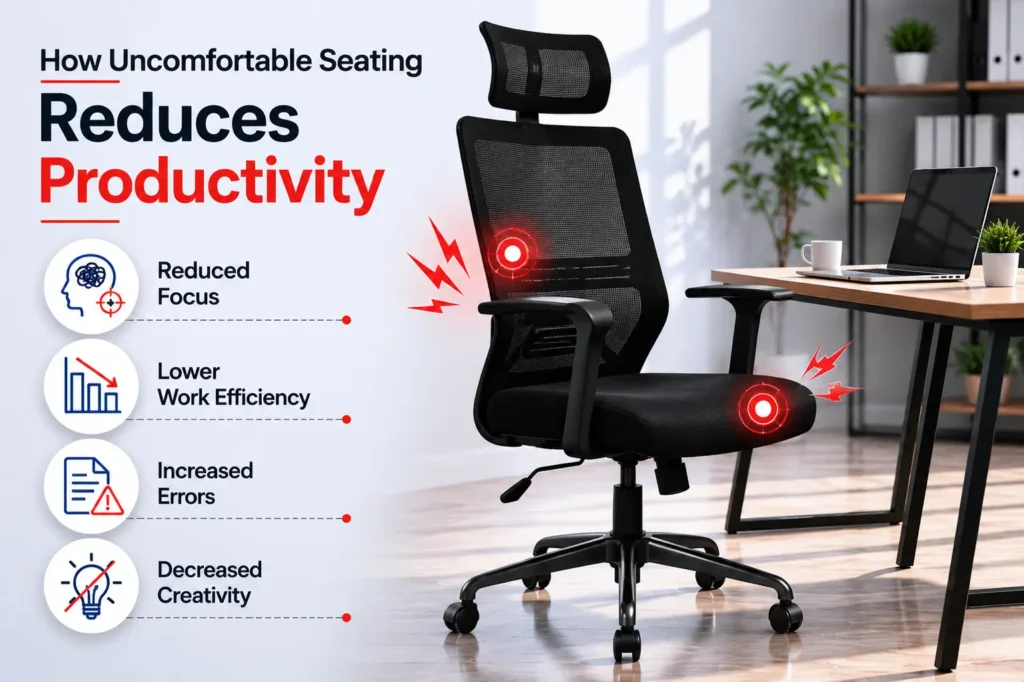
How Uncomfortable Seating Reduces Productivity
Many employers are surprised to learn how closely seating and productivity are connected.
When employees are uncomfortable, they spend a significant portion of their day adjusting their position, stretching, or trying to relieve discomfort. These small interruptions add up over time.
1.Reduced Focus
Discomfort distracts the mind. Instead of focusing on work, employees become aware of aches and physical strain.
A comfortable chair allows workers to stay focused on tasks for longer periods without unnecessary distractions.
2.Lower Work Efficiency
Physical discomfort often slows performance. Employees may take longer to complete tasks, struggle with concentration, or feel less motivated throughout the day.
3.Increased Errors
Fatigue and discomfort can negatively impact attention to detail. Employees working in uncomfortable environments are more likely to make mistakes, which can affect overall business performance.
4.Decreased Creativity
Comfortable environments encourage better thinking and problem-solving. Employees who feel physically supported are often more engaged, creative, and productive.
The Financial Impact on Businesses
Poor seating does not just affect individuals – it impacts the entire organization.
1.Higher Absenteeism
Employees experiencing chronic discomfort or pain may require more sick leave. Frequent absences can disrupt workflows and increase operational costs.
2.Increased Employee Turnover
Workplace comfort plays a significant role in employee satisfaction. Staff members who feel that their well-being is ignored may seek opportunities elsewhere.
Replacing employees involves recruitment costs, training expenses, and lost productivity.
3.Lower Customer Experience
For businesses such as cafés, restaurants, waiting areas, and hospitality spaces, customer seating is equally important.
Uncomfortable seating can reduce customer satisfaction and shorten visit durations. Comfortable seating encourages guests to relax, stay longer, and enjoy their experience.
4.Hidden Operational Costs
When productivity decreases and absenteeism rises, businesses experience losses that often go unnoticed. Investing in quality seating can help reduce these hidden expenses over time.
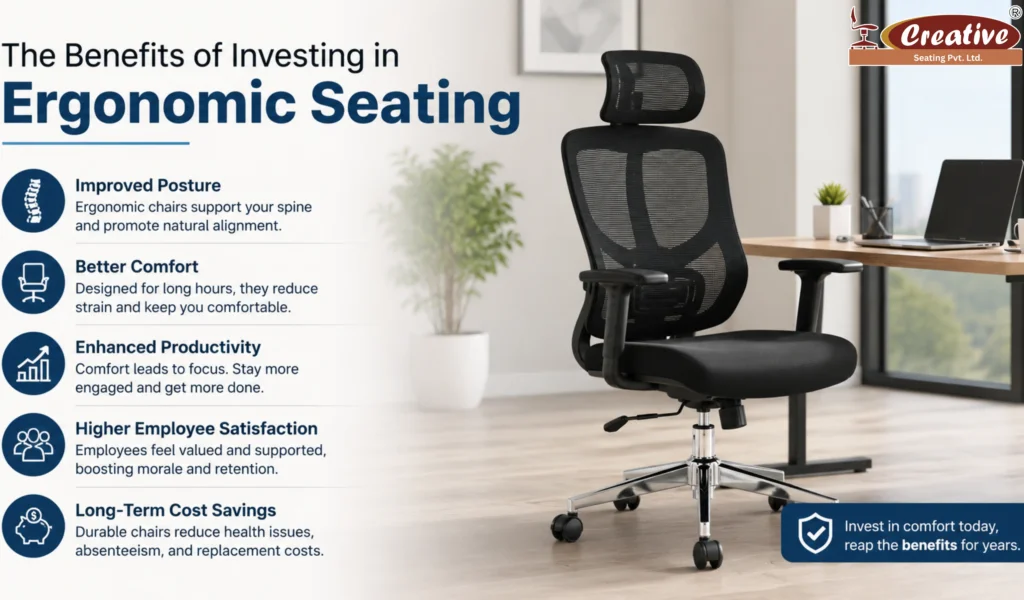
The Benefits of Investing in Ergonomic Seating
Ergonomic seating is specifically designed to support the natural posture and movements of the human body.
1.Improved Posture
Ergonomic chairs help maintain proper spinal alignment, reducing strain on the back, neck, and shoulders.
2.Better Comfort
Features such as adjustable height, lumbar support, armrests, and breathable materials improve overall comfort during long periods of sitting.
3.Enhanced Productivity
Employees who are comfortable can focus better, work more efficiently, and maintain higher energy levels throughout the day.
4.Higher Employee Satisfaction
Providing quality seating demonstrates that a company values employee well-being. This can improve morale, engagement, and workplace culture.
5.Long-Term Cost Savings
Although ergonomic chairs may require a higher initial investment, they often reduce healthcare costs, absenteeism, and employee turnover in the long run.
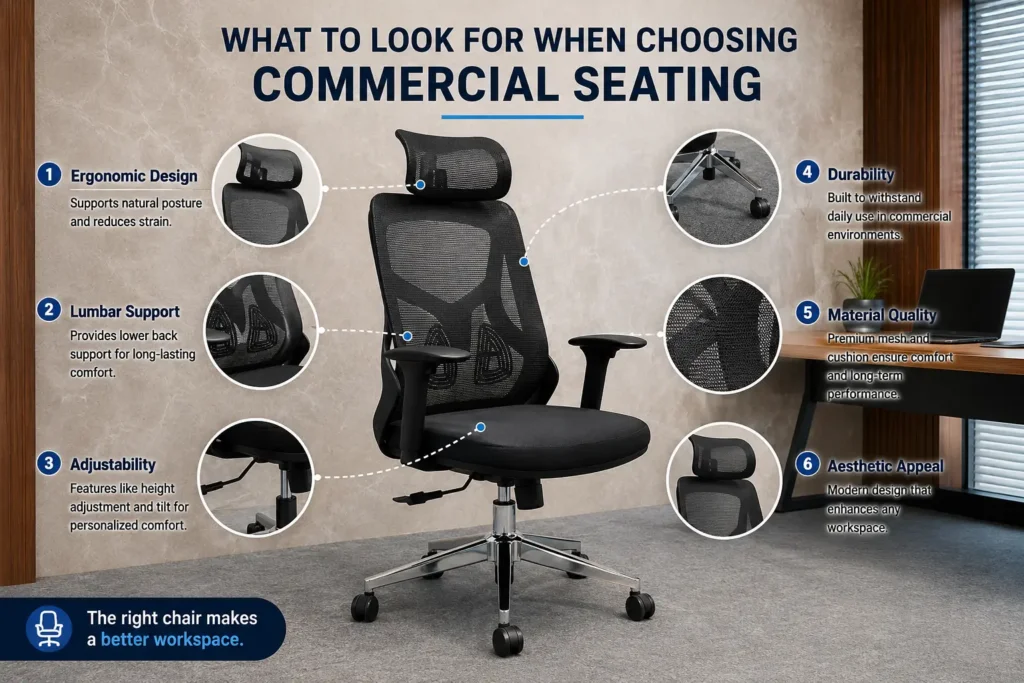
What to Look for When Choosing Commercial Seating
Selecting the right seating requires careful consideration. Here are some key factors businesses should evaluate:
1. Ergonomic Design
Look for chairs that support natural body posture and offer adjustable features.
2. Lumbar Support
Proper lower back support is essential for maintaining spinal health and reducing discomfort.
3. Adjustability
Employees have different body types and preferences. Adjustable height, armrests, and seat depth help accommodate individual needs.
4. Durability
Commercial seating should withstand daily use while maintaining performance and appearance.
5. Material Quality
Breathable fabrics, quality cushioning, and durable finishes contribute to long-term comfort and reliability.
6. Aesthetic Appeal
Furniture should complement the overall design and branding of the workspace while maintaining functionality.
The Role of Seating in Customer-Focused Businesses
The impact of seating extends beyond employees.
In cafés, restaurants, hotels, lounges, and waiting areas, seating directly influences customer perception.
Comfortable seating can:
- Improve customer satisfaction
- Encourage longer visits
- Increase repeat business
- Enhance brand image
- Create memorable experiences
Customers often associate comfort with quality service. A thoughtfully designed seating arrangement can leave a lasting positive impression.
Future Workplace Trends and Seating Solutions
The modern workplace continues to evolve. Hybrid work models, collaborative spaces, and employee wellness initiatives are reshaping office design.
As businesses become more focused on health and productivity, ergonomic furniture is becoming a standard requirement rather than an optional upgrade.
Future trends include:
- Flexible seating solutions
- Height-adjustable workstations
- Wellness-focused office design
- Sustainable furniture materials
- Smart ergonomic technologies
Organizations that invest in these trends today are better positioned to attract talent and create productive work environments tomorrow.
Frequently Asked Questions (FAQs)
1. Why is ergonomic seating important in the workplace?
Ergonomic seating supports proper posture, reduces physical strain, improves comfort, and helps employees remain productive throughout the day.
2. Can poor seating affect employee productivity?
Yes. Discomfort, fatigue, and pain caused by poor seating can reduce focus, increase mistakes, and lower overall efficiency.
3. How often should office chairs be replaced?
The lifespan of an office chair depends on usage and quality. Most high-quality commercial chairs last between 7 to 10 years with proper maintenance.
4. What features should I look for in an ergonomic chair?
Important features include lumbar support, adjustable height, armrests, seat depth adjustment, breathable materials, and durable construction.
5. Does comfortable seating improve employee satisfaction?
Absolutely. Employees who feel physically comfortable are generally happier, more engaged, and more satisfied with their work environment.
6. Is ergonomic furniture worth the investment?
Yes. While the initial cost may be higher, ergonomic furniture can reduce absenteeism, improve productivity, and lower long-term operational expenses.
7. How does customer seating affect business success?
Comfortable seating enhances customer experiences, encourages longer visits, and helps build positive impressions that can lead to repeat business.
Conclusion
Many businesses underestimate the true impact of seating. What appears to be a simple furniture decision can significantly influence employee health, workplace productivity, customer satisfaction, and overall business performance.
Uncomfortable seating creates hidden costs that often go unnoticed until they begin affecting employee well-being, operational efficiency, and profitability. In contrast, investing in high-quality ergonomic seating helps create a healthier, more productive, and more positive environment for everyone.
Whether you are designing a modern office, upgrading a café, furnishing a collaborative workspace, or improving customer areas, the right seating should be viewed as an investment rather than an expense.
At the end of the day, people perform their best when they feel comfortable. And when people perform their best, businesses grow.