
Currently Empty: ₹0.00

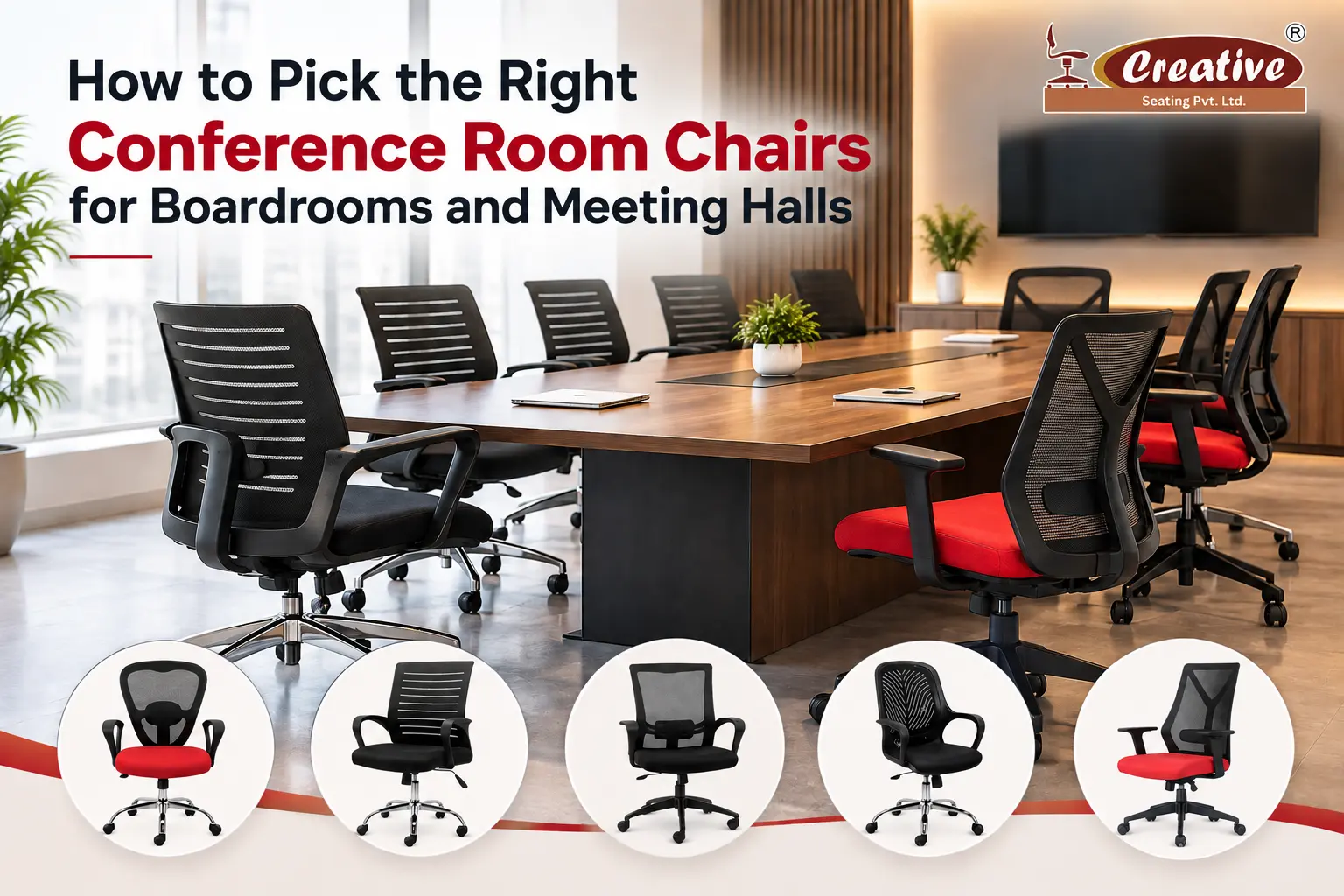
Choosing the right conference room chairs is important for creating a comfortable and professional meeting space. Whether you are setting up a corporate boardroom, training room, meeting hall, or client discussion area, the chairs should support people through long meetings without causing discomfort.
A good conference chair should offer the right balance of comfort, ergonomics, durability, appearance, and space efficiency. It should also match the size and purpose of the room.
This practical guide explains what to check before buying conference room chairs, how to plan seating, and what features matter most for Indian corporate offices.
1. Start With the Purpose of the Room
Before selecting chairs, understand how the room will actually be used.
A boardroom used for senior management meetings may need premium-looking upholstered chairs with good back support. A meeting room used for short internal discussions may require simpler and more space-efficient seating.
Consider:
- How long meetings usually last
- Number of people using the room
- Whether clients or visitors will use the space
- Whether the room is used daily or occasionally
- Whether chairs need to be moved frequently
- Available space around the conference table
For meetings lasting one to two hours, basic comfortable seating may be sufficient. For longer meetings, ergonomic support becomes much more important.
2. Measure the Conference Room Before Buying
One of the most common mistakes is selecting chairs first and checking the room later.
Measure the room and conference table before ordering conference room chairs.
Check:
- Room length and width
- Conference table dimensions
- Table height
- Available space between the table and walls
- Number of seats required
- Door and walking space
- Space required to pull chairs out
Don’t try to fit the maximum possible number of chairs. People need enough personal space to sit, move their arms, and get in and out comfortably.
For example, a large boardroom table may technically accommodate 14 chairs, but if the chairs are too close together, the meeting room will feel crowded.
3. Choose the Right Chair Height
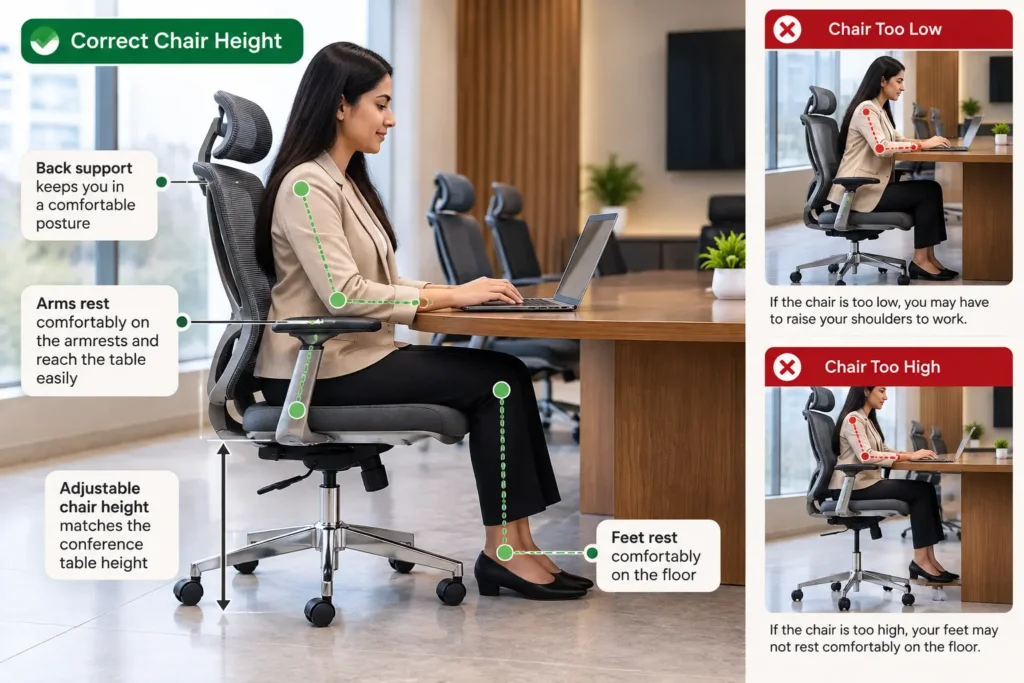
Chair height should work comfortably with the conference table.
When someone sits down, their feet should rest comfortably on the floor and their arms should be able to reach the tabletop without raising their shoulders.
For most standard conference tables, a standard office or conference chair height works well. However, always check the actual table height and chair dimensions before bulk purchasing.
If the chair is too low, users may have to raise their shoulders to work. If it is too high, their feet may not sit comfortably on the floor.
4. Prioritize Back Support for Long Meetings
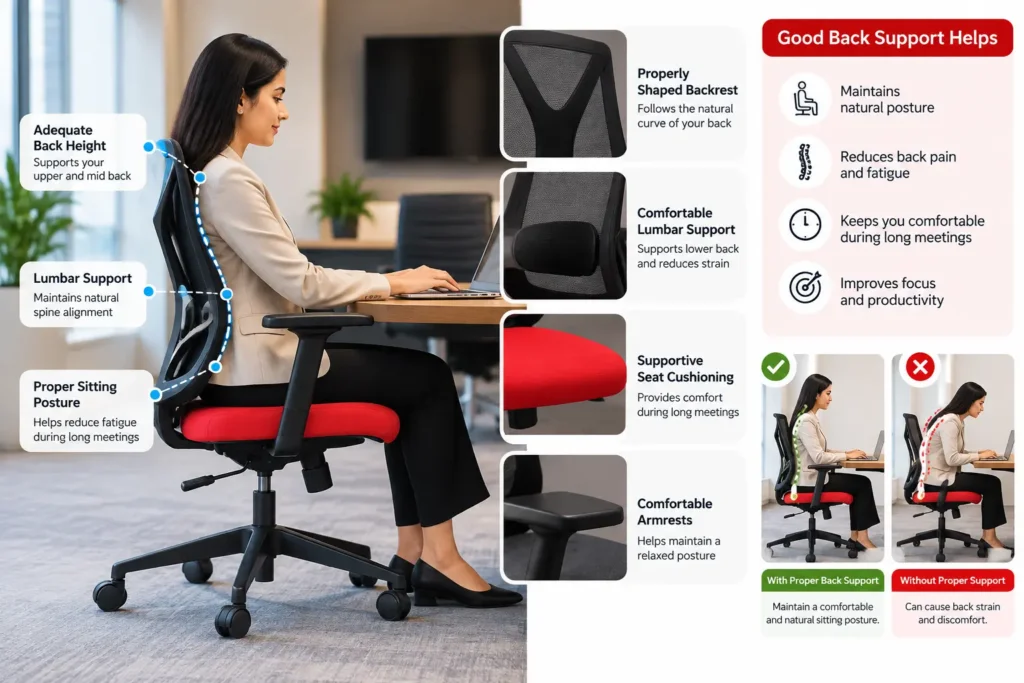
One of the most important features of meeting room seating is back support.
A conference meeting can easily last several hours, especially during presentations, reviews, interviews, or strategy discussions.
Look for:
- Properly shaped backrests
- Adequate back height
- Comfortable lumbar support
- Supportive seat cushioning
- A seat that allows natural sitting posture
For offices searching for the best ergonomic chairs for conference rooms in corporate offices India, don’t focus only on how attractive the chair looks. Sit on the chair and check whether the backrest supports the user’s natural posture.
A chair that looks premium but becomes uncomfortable after 30 minutes may not be practical for a boardroom.
5. Select Upholstery According to Usage
The upholstery affects both comfort and maintenance.
Common options include:
Fabric
Fabric chairs provide a softer and comfortable feel. They can work well in corporate meeting rooms where comfort is important.
Leatherette
Leatherette gives a more executive appearance and is generally easier to wipe clean. It is commonly considered for premium boardrooms and client-facing areas.
Mesh
Mesh allows better airflow and can be useful in offices where meetings are long or rooms are not always heavily air-conditioned.
Plastic or Polypropylene
These chairs can be practical for training rooms, cafeterias, multipurpose halls, and spaces where easy cleaning and durability are priorities.
The right material depends on the room’s purpose rather than simply choosing the most expensive option.
6. Decide Whether You Need Chairs With Wheels
One frequently asked question is whether conference chairs should have wheels.
The answer depends on how the room is used.
Chairs with wheels are useful when users need to move frequently around a table or when the same room is used for different activities.
Fixed chairs can be a better option when:
- The room has a formal boardroom setup
- Chairs normally stay around one table
- You want a cleaner, more stable arrangement
- Users do not need to move around frequently
For executive boardrooms, fixed or swivel chairs can create a more formal appearance. For flexible meeting and training rooms, mobile chairs may offer more convenience.
7. Consider Chair Width and Armrests
Chair dimensions directly affect how many people can comfortably sit around the table.
Before purchasing, check the chair’s:
- Overall width
- Seat width
- Armrest width
- Seat depth
- Backrest width
Armrests can improve comfort during longer meetings, but they also require additional space.
If the conference table is designed for 10 people, installing very wide executive chairs may reduce the practical seating capacity.
Always compare chair width + required spacing with the available table length.
8. Match the Chair With the Boardroom Design
A boardroom is also a representation of the company’s professional environment.
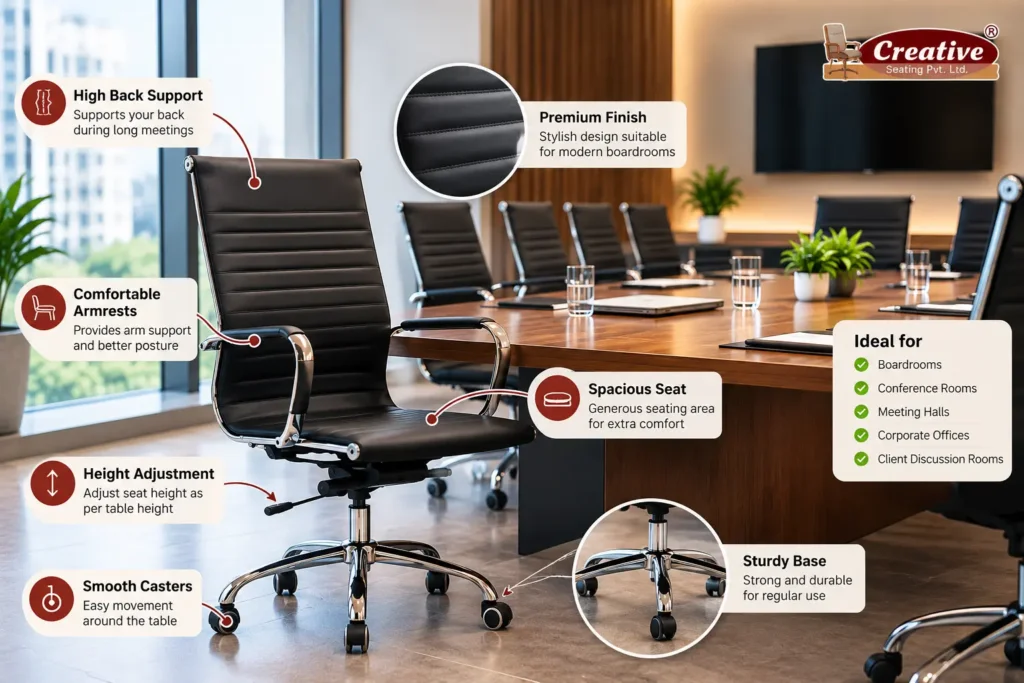
For formal boardrooms, consider chairs with:
- Premium upholstery
- Clean, professional shapes
- Strong frames
- Comfortable high backs
- Neutral or corporate finishes
For modern meeting rooms, contemporary chairs with mesh, fabric, or minimalist designs may work better.
When selecting boardroom chairs India, consider whether the design matches your office interiors, conference table, flooring, lighting, and overall brand image.
The chair does not need to be overly decorative. A simple professional design can often create a cleaner corporate environment.
9. Check Durability Before Bulk Ordering
Conference chairs can experience frequent use, particularly in corporate offices, hotels, institutions, and training centers.
Before placing a large order, ask the conference chair supplier about:
- Frame construction
- Base material
- Weight capacity
- Upholstery durability
- Warranty
- Replacement parts
- Maintenance requirements
- Product testing, if applicable
If you are buying 20, 30, or 50 chairs, request a sample first.
Use the sample chair in the actual meeting room and test it for comfort, stability, dimensions, and appearance before confirming the complete quantity.
10. Think About Maintenance
Conference rooms should look professional even after regular use.
Choose materials that match your cleaning requirements.
For example, if the chairs are frequently used by visitors and clients, easily cleanable upholstery may be practical. If the room is used occasionally, fabric upholstery may provide a more comfortable premium feel.
Also check whether replacement components such as wheels, gas lifts, armrests, or upholstery parts are available.
This becomes especially important when purchasing from a premium boardroom chairs supplier in India for large corporate projects.
11. Don’t Ignore the Table-to-Chair Relationship
The conference table and chair should work together.
Before finalizing the chairs, place a sample chair next to the table and check:
- Can the chair slide comfortably under the table?
- Do the armrests hit the tabletop?
- Is there enough legroom?
- Can users sit without touching the table with their knees?
- Can people easily enter and leave their seats?
- Is there enough walking space behind the chairs?
This simple physical test can prevent expensive mistakes during bulk purchasing.
12. Buy According to the Total Requirement
When purchasing conference room chairs, don’t compare products based only on the individual chair price.
Consider the complete cost:
- Chair price
- Delivery
- Installation, if required
- Warranty
- Maintenance
- Replacement parts
- Expected lifespan
A slightly higher initial cost can be practical if the chair provides better durability and comfort over years of regular use.
For corporate offices, hotels, institutions, and other commercial spaces, selecting a reliable conference chair supplier can also make bulk procurement and after-sales support easier.
Final Checklist Before Buying Conference Room Chairs
Before placing your order, check these points:
- ✔ Measure the room and conference table
- ✔ Decide the required seating capacity
- ✔ Check chair dimensions
- ✔ Test seat and back comfort
- ✔ Check table compatibility
- ✔ Select suitable upholstery
- ✔ Decide fixed or wheeled chairs
- ✔ Consider armrest requirements
- ✔ Check durability and weight capacity
- ✔ Ask about warranty and service
- ✔ Test one sample before bulk ordering
- ✔ Consider long-term maintenance
FAQs
What is the best chair type for a boardroom?
For a formal boardroom, a comfortable executive-style chair with good back support, appropriate cushioning, and a professional finish is commonly suitable. The final choice should depend on meeting duration, table dimensions, available space, and the company’s interior design.
How many chairs fit in a standard conference room?
There is no fixed number because it depends on the room size, conference table dimensions, and chair width. Instead of filling every available space, allow sufficient room for users to sit comfortably and move their chairs.
Should conference chairs have wheels?
Not always. Wheeled chairs are useful for flexible meeting spaces where people need to move frequently. Fixed chairs can be more suitable for formal boardrooms where seating positions remain consistent.
Conclusion
Choosing the right conference room chairs is not simply about selecting a good-looking chair. The right decision comes from understanding the room, table size, meeting duration, seating capacity, user comfort, maintenance requirements, and long-term usage.
For corporate boardrooms and meeting halls, start by measuring the space, test a sample chair, check ergonomics, and make sure the chair works comfortably with the conference table. A practical combination of comfort, durability, professional design, and suitable dimensions will help create a meeting space that works well for everyday use.

