
Currently Empty: ₹0.00


Assembling a restaurant chair may look like a simple task, but small mistakes during fitting can affect its stability, comfort and overall appearance. Whether you are setting up chairs for a new cafe, restaurant, hotel or dining space, proper assembly is important.
Many upholstered restaurant chairs feature a combination of a cushioned seat, upholstered backrest and metal frame. These components need to be fitted correctly to ensure the chair remains stable during everyday use.
If you are wondering how to assemble restaurant chair models correctly, this practical guide will help you understand the basic process, identify common fitting mistakes and check the chair before putting it into use.
Let’s go through the process step by step.
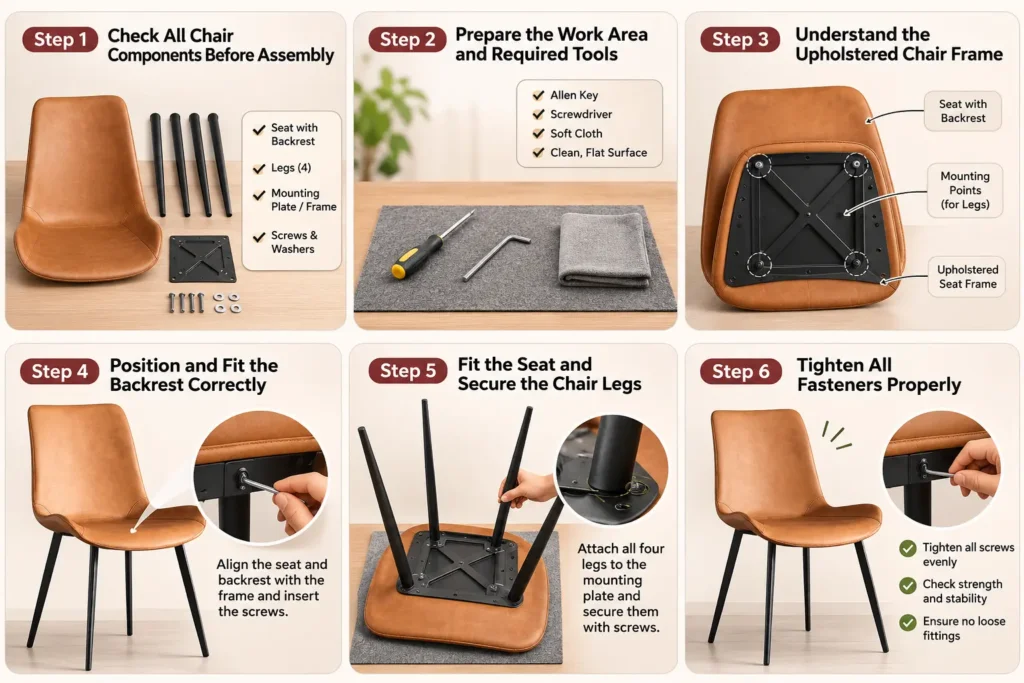
Step 1: Check All Chair Components Before Assembly
Before starting restaurant chair assembly, take a few minutes to inspect all the supplied components.
Depending on the chair design, the package may include:
- Upholstered seat
- Upholstered backrest
- Metal chair frame or individual legs
- Backrest support brackets
- Screws, bolts and washers
- Allen key or other supplied fitting tools
The components may differ depending on the chair model. Some restaurant chairs come with a pre-assembled metal frame, while others require additional fitting.
Activity: Perform a Quick Component Check
Place all the components on a clean, flat surface.
Check these five things:
- Are all the required components available?
- Is the upholstered seat free from cuts or damage?
- Are the metal legs straight and properly finished?
- Are the screw holes properly aligned?
- Are the required fasteners available?
If you notice missing screws, damaged upholstery or bent frame components, contact the supplier before continuing.
Step 2: Prepare the Work Area and Required Tools
A clean and organised workspace makes chair assembly easier.
Avoid assembling a chair directly on a rough floor because it may scratch the metal frame or damage the upholstery.
Tools You May Need:
- Allen key
- Screwdriver, if required
- Supplied screws and bolts
- Soft cloth or protective sheet
- Small container for keeping fasteners together
Always use the tools recommended for your chair model.
Activity: Prepare Your Assembly Space
- Select a flat and clean working surface.
- Place cardboard or a soft protective sheet underneath the chair components.
- Arrange the screws and bolts separately.
- Keep the fitting instructions nearby.
- Check that you have enough space to turn the chair safely.
This simple preparation can prevent unnecessary scratches and misplaced fittings.
Step 3: Understand the Upholstered Chair Frame
Before fitting the components, understand how the chair frame supports the seat and backrest.
An upholstered chair frame generally provides the structural support for the seating components. The metal structure holds the seat in position and connects the backrest supports.
In restaurant chairs, the frame design can vary.
For example:
- Some models have four individual metal legs.
- Some have integrated side supports.
- Some use separate backrest brackets.
- Some feature angled legs for a distinctive appearance.
Activity: Inspect the Frame
Look at your chair frame and identify:
- The front leg positions.
- Additionally, the rear leg positions.
- At this stage, mark the seat mounting points.
- The backrest support positions.
- The available screw holes.
Understanding these points before assembly makes it easier to follow the correct fitting sequence.
Step 4: Position and Fit the Backrest Correctly
The backrest is an important part of the chair because it supports the user’s back while sitting.
Depending on the model, the upholstered backrest may connect directly to the metal frame or through separate support brackets.
How to Fit the Backrest:
- Position the backrest according to the supplied assembly instructions.
- Match its mounting points with the corresponding frame holes.
- Insert the correct screws or bolts.
- Start tightening the fasteners by hand or with the recommended tool.
- Check that both sides are positioned evenly.
Avoid fully tightening one side while the other side remains loose. This can make alignment more difficult.
Activity: Check Backrest Alignment
Stand in front of the chair and observe the backrest.
- Does it sit evenly?
- Are both sides properly aligned?
- Are the fasteners correctly positioned?
- Is the upholstery free from unwanted pressure or damage?
If something looks uneven, loosen the fasteners slightly and check the alignment again.
Step 5: Fit the Seat and Secure the Chair Legs
Once the backrest is correctly positioned, follow the model-specific instructions for fitting the seat and legs.
Some chairs have a separate seat and frame, while others have a pre-assembled structure.
For detachable seat and leg designs:
- Position the seat over the corresponding frame mounting points.
- Align the screw holes without forcing the components.
- Insert the supplied fasteners.
- Check that the legs are positioned in their correct locations.
- Tighten the fasteners gradually and evenly.
How to Fit Chair Legs Securely
Pay attention to the position of each leg. Angled metal legs should not be forced into a different position to match a screw hole.
Check that:
- All legs are attached to their intended mounting points.
- No fastener is missing.
- The frame is not twisted.
- The seat sits evenly on its supporting structure.
Activity: Perform a Leg Stability Check
Place the assembled chair on a flat floor.
Observe all four legs and check whether they make proper contact with the surface.
If the chair rocks, do not immediately bend or adjust the legs. Recheck the fasteners, frame alignment and assembly instructions first.
Step 6: Tighten All Fasteners Properly
Fasteners hold the different chair components together. However, tightening them too much can damage threads, fittings or mounting points.
Similarly, loose fasteners can cause movement and unwanted noise during use.
Activity: Final Fastener Inspection
Check each accessible screw and bolt.
- Confirm that the fasteners are correctly inserted.
- Tighten them using the recommended tool.
- Follow the manufacturer’s tightening instructions.
- Avoid applying excessive force.
- Check that no fastener is missing or protruding.
If the manufacturer provides a recommended torque value, follow it.
Step 7: Test the Chair Before Regular Use
Your chair may look properly assembled, but a final inspection is necessary before placing it in a restaurant or dining area.
Activity: Complete the Final Chair Inspection
Check the following points:
- Is the chair standing evenly?
- Are all legs stable?
- Is the backrest properly secured?
- Is the seat firmly attached?
- Are all accessible fasteners tightened?
- Is the upholstery free from assembly damage?
- Does the chair remain stable during a normal sitting test?
If you notice unusual movement, looseness or noise, stop using the chair until the issue is identified and corrected.
Restaurant Chair Assembly Checklist
Use this checklist whenever you assemble a new chair.
| Inspection Point | Status |
|---|---|
| All components checked | ✓ |
| Required tools available | ✓ |
| Work area prepared | ✓ |
| Backrest properly aligned | ✓ |
| Seat correctly positioned | ✓ |
| Legs securely fitted | ✓ |
| Fasteners checked | ✓ |
| Final stability inspection completed | ✓ |
Completing this restaurant chair assembly checklist helps reduce common fitting mistakes.
Frequently Asked Questions
1. What should I check before assembling a chair?
Check that all components, screws, bolts and required tools are available. Inspect the upholstered seat, backrest and metal frame for visible damage. Also check the mounting holes and refer to the model-specific assembly instructions.
2. How tight should the fasteners be?
Fasteners should be tightened securely according to the manufacturer’s instructions. Avoid overtightening because excessive force can damage screw threads, mounting points or other components. If a torque specification is provided, follow it.
3. What should I do if parts do not align?
Never force the components together. Loosen any partially fitted fasteners, recheck the component positions and compare them with the assembly instructions. If the holes still do not align, contact the manufacturer or supplier for assistance.

Choose the Right Restaurant Chairs for Your Space
Proper assembly is only one part of selecting suitable seating for a commercial space. The chair design, frame construction, upholstery, comfort and durability also matter.
If you are planning to purchase chairs for a cafe, restaurant, hotel or dining project, choosing an experienced restaurant chair manufacturer can help you understand the available designs and specifications.
Creative Seating offers commercial seating solutions for different hospitality and business spaces. Whether you are searching for restaurant chair suppliers in India or looking for restaurant chair suppliers in Pune, Kolkata, Delhi and Bengaluru, selecting the right product and supplier is an important step.
Before comparing restaurant chair prices, consider the chair’s materials, construction, design and suitability for your space.
Explore commercial seating solutions at Creative Seating: https://creativeseatings.com/
Choose the right chair, assemble it correctly and create a comfortable seating experience for your customers.

