Currently Empty: ₹0.00

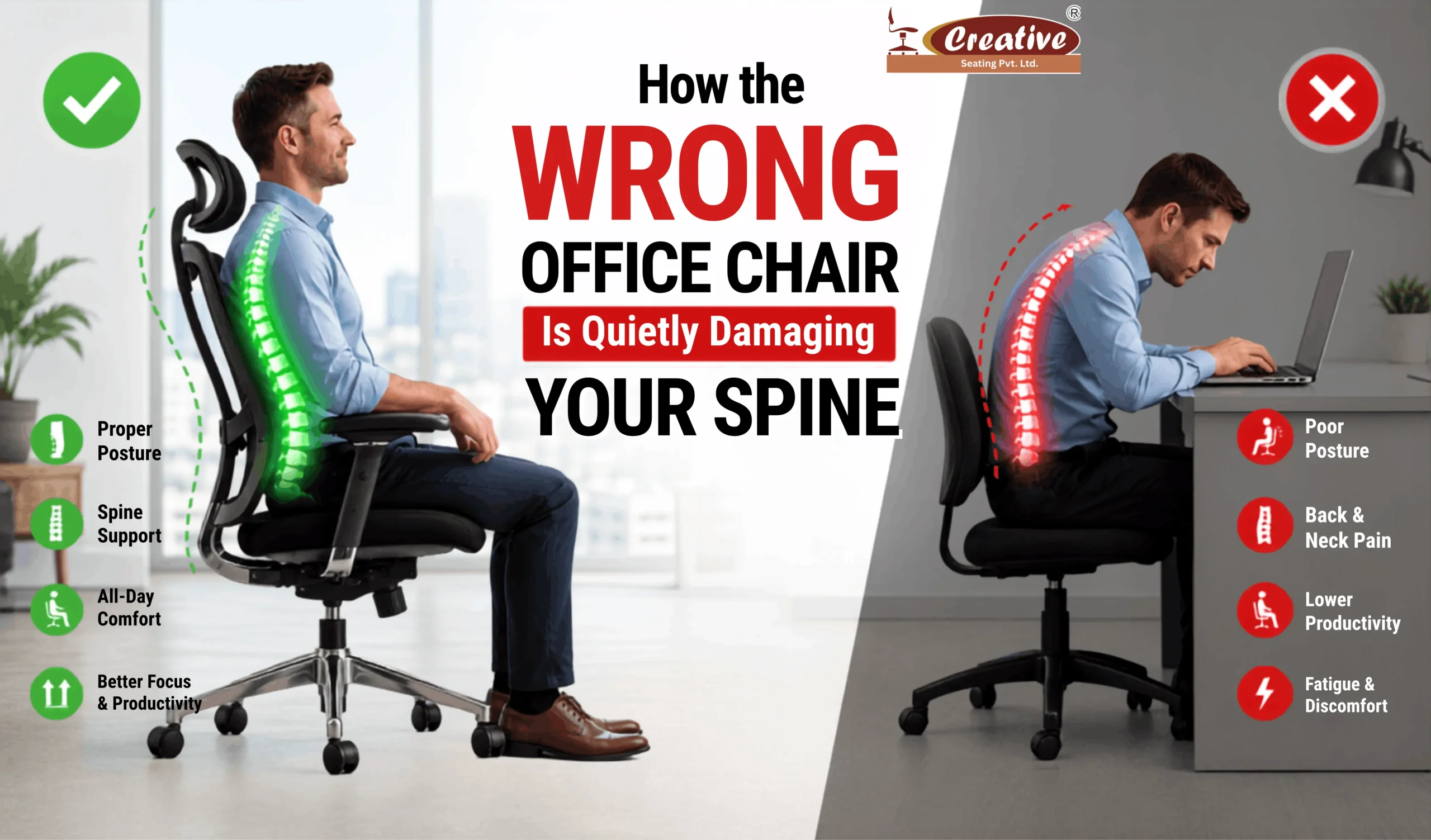
Most people spend 7–10 hours a day sitting at their desks. Whether you work from an office or from home, your chair plays a bigger role in your health than you may realize. Many people blame long working hours, stress, or lack of exercise for their back pain, but often the real culprit is sitting right beneath them-the wrong office chair.
Back pain has become one of the most common health complaints among working professionals in India. What starts as mild discomfort can slowly develop into chronic pain, poor posture, neck stiffness, and even spinal problems. The good news? These issues are often preventable with the right seating solution.
In this blog, we’ll explore how an unsuitable office chair can silently damage your spine, the warning signs to watch for, and how choosing an ergonomic chair in India can help you work comfortably and stay healthy.
Why Your Spine Needs Proper Support
Your spine is naturally designed with gentle curves that help distribute body weight evenly. These curves support movement, balance, and flexibility. However, when you sit for long periods in a poorly designed chair, these natural curves begin to flatten or become exaggerated.
Over time, this creates excessive pressure on your lower back, shoulders, neck, and hips. The result is discomfort that gradually turns into pain.
When your chair fails to support your body properly, your muscles work harder to keep you upright. This constant strain can lead to:
- Lower back pain
- Neck stiffness
- Shoulder tension
- Poor posture
- Reduced blood circulation
- Fatigue and reduced productivity
Many office workers don’t realize the damage until the symptoms become difficult to ignore.
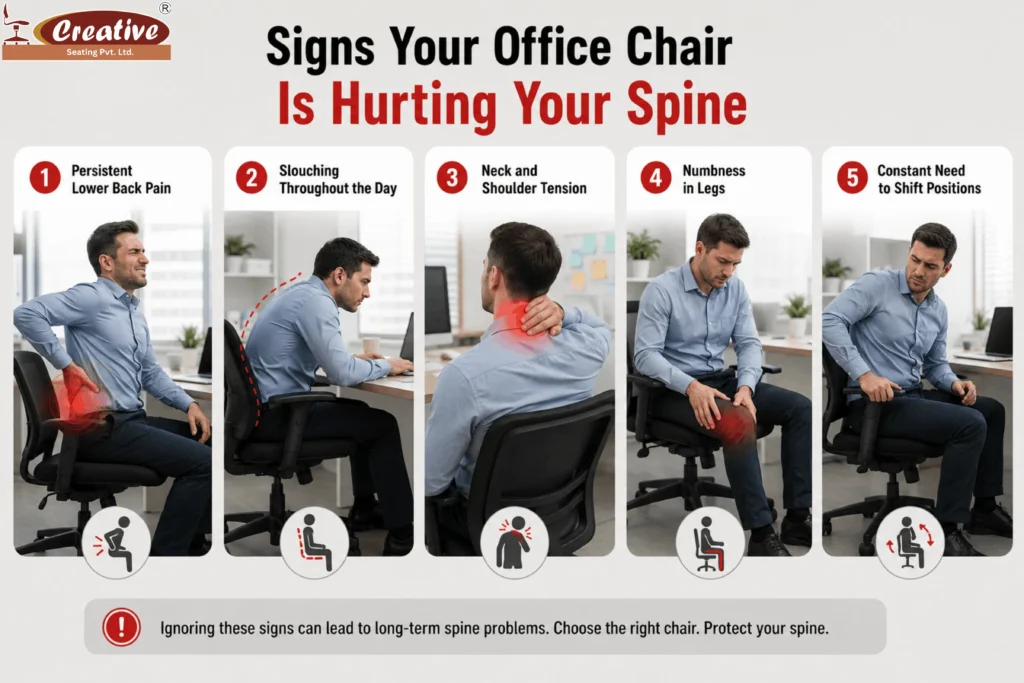
Signs Your Office Chair Is Hurting Your Spine
Sometimes the signs are subtle. You may think they’re normal effects of a busy workday. However, they could indicate that your chair isn’t supporting your body correctly.
1. Persistent Lower Back Pain
If your lower back aches after sitting for a few hours, your chair may not provide adequate lumbar support. The lower spine needs continuous support to maintain its natural inward curve.
2. Slouching Throughout the Day
Do you often find yourself leaning forward toward your screen? A poorly designed chair encourages bad posture and puts extra stress on your spine.
3. Neck and Shoulder Tension
An office chair that lacks proper back support forces your upper body muscles to compensate, leading to tension around the neck and shoulders.
4. Numbness in Legs
Poor seat design can restrict blood circulation and place pressure on nerves, causing tingling or numbness in your legs.
5. Constant Need to Shift Positions
If you frequently adjust your sitting position to stay comfortable, your chair may not be supporting your body correctly.
These signs should not be ignored because they can develop into more serious spinal issues over time.
How a Poor Office Chair Affects Your Spine
1.Loss of Natural Lumbar Curve
The lower back naturally curves inward. Standard office chairs with flat backrests often fail to support this curve.
As a result, the spine gradually shifts into an unhealthy position, increasing stress on spinal discs and surrounding muscles.
2.Increased Pressure on Spinal Discs
When sitting incorrectly, pressure on spinal discs can increase significantly compared to standing.
Over time, this added pressure may contribute to disc degeneration, chronic back pain, and discomfort during everyday activities.
3.Weakening of Core and Back Muscles
A poor sitting posture causes certain muscles to become overworked while others weaken.
This muscular imbalance reduces spinal stability and increases the risk of injury.
4.Forward Head Posture
Many people unknowingly push their heads forward while working. Every inch your head moves forward increases the load on your neck muscles.
This can lead to headaches, neck pain, and upper back discomfort.
The Importance of Lumbar Support
One of the most important features in a modern office chair is lumbar support.
A lumbar support chair is specifically designed to support the natural curve of the lower spine. It helps maintain proper posture while reducing strain on spinal discs and muscles.
Benefits of proper lumbar support include:
- Reduced lower back pain
- Better posture
- Less muscle fatigue
- Improved comfort during long working hours
- Increased productivity
For professionals who spend most of their day sitting, investing in a chair with proper lumbar support is not a luxury—it’s a necessity.
Why Ergonomic Chairs Are Becoming Essential in India
The demand for ergonomic chair India solutions has increased significantly in recent years. More companies and professionals now understand that workplace comfort directly impacts employee health and productivity.
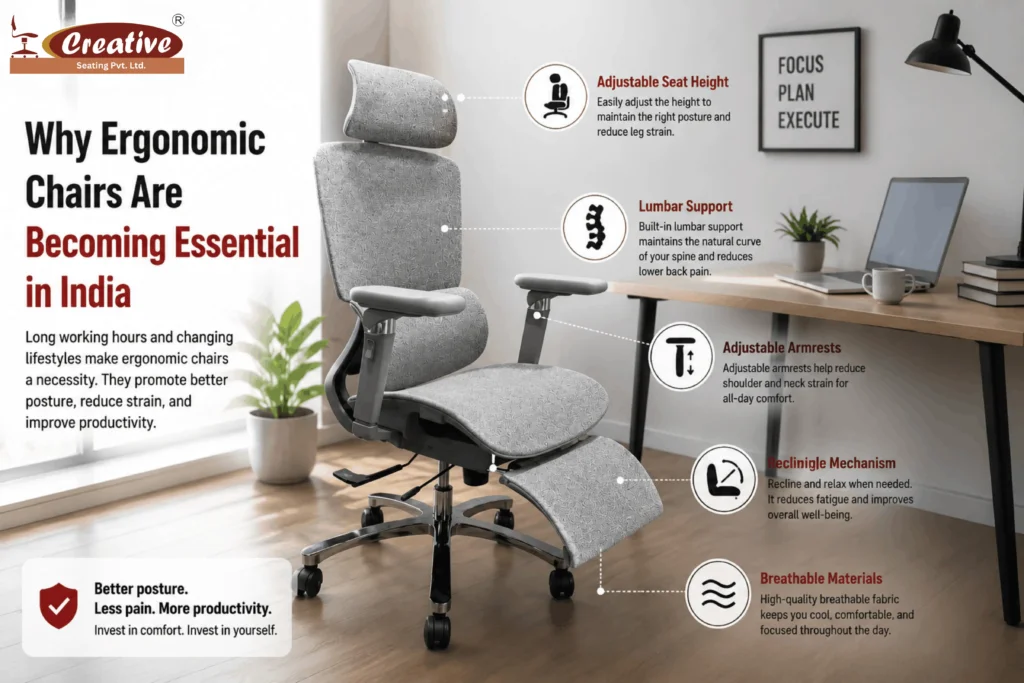
An ergonomic chair is designed around the human body. Unlike traditional office chairs, ergonomic models provide adjustable features that accommodate different body types and sitting preferences.
Key features include:
1.Adjustable Seat Height
Your feet should rest flat on the floor while your knees remain at a comfortable 90-degree angle.
2.Lumbar Support
Proper support helps maintain spinal alignment and reduces pressure on the lower back.
3.Adjustable Armrests
Armrests should support your elbows and reduce strain on shoulders.
4.Reclining Mechanism
A slight recline can reduce pressure on the spine and improve comfort.
5.Breathable Materials
Comfortable upholstery promotes airflow and reduces discomfort during long work sessions.
These features work together to create a healthier sitting experience.
How to Choose the Best Office Chair for Lower Back Pain Under 15000 in India
Many people assume that a quality ergonomic chair must be expensive. Fortunately, that’s not always true.
If you’re looking for the best office chair for lower back pain under 15000 in India, consider these factors:
Check Lumbar Support
Ensure the chair provides dedicated lower back support.
Look for Adjustable Features
The more adjustments available, the easier it will be to customize the chair to your body.
Evaluate Seat Cushioning
A comfortable seat should support your weight without feeling too soft or too hard.
Consider Build Quality
Durable materials ensure long-term support and value.
Test Recline Functionality
A reclining backrest allows movement and reduces spinal stress.
Choose Trusted Manufacturers
Investing in quality seating from experienced manufacturers ensures better comfort, durability, and support.
Companies like Creative Seating offer a wide range of office chairs designed to enhance workplace comfort while supporting healthy posture.
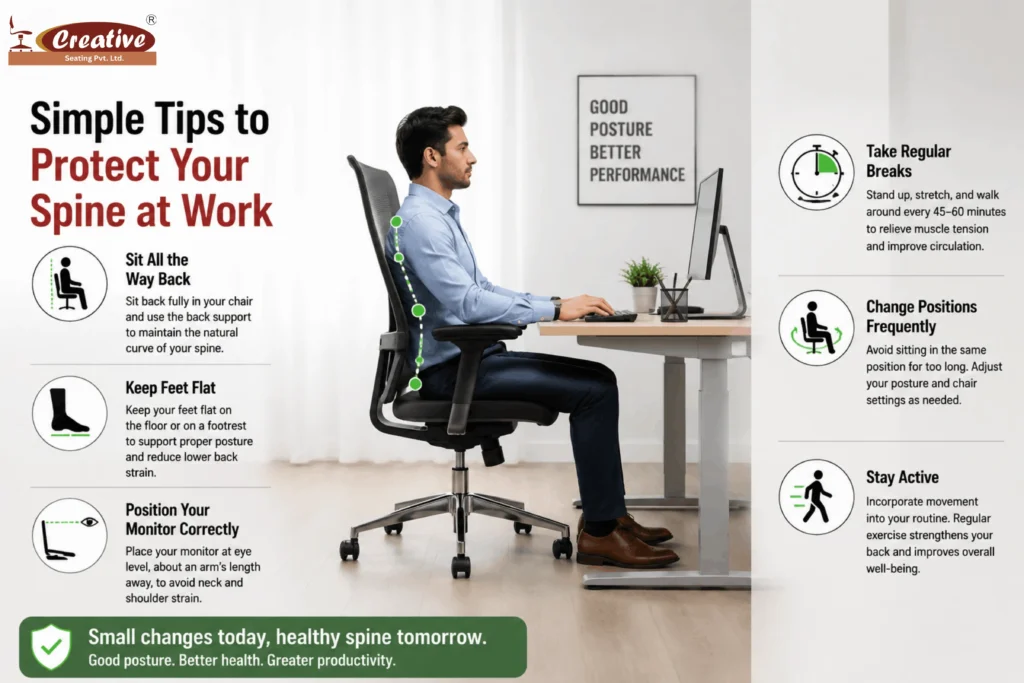
Simple Tips to Protect Your Spine at Work
Even the best chair works best when combined with healthy habits.
Sit All the Way Back
Use the chair’s backrest instead of leaning forward.
Keep Feet Flat
Your feet should rest comfortably on the floor.
Position Your Monitor Correctly
The top of your screen should be at eye level.
Take Regular Breaks
Stand up and stretch every 30–60 minutes.
Change Positions Frequently
Avoid remaining in one posture for extended periods.
Stay Active
Regular exercise strengthens muscles that support your spine.
These small habits can significantly reduce the risk of office chair back pain.
The Hidden Cost of Ignoring Back Pain
Many professionals continue working through discomfort, believing it will eventually go away.
Unfortunately, untreated posture-related issues often worsen over time.
The consequences may include:
- Chronic back pain
- Reduced mobility
- Increased medical expenses
- Lower productivity
- Frequent sick leave
- Long-term spinal complications
Replacing an unsuitable chair is often far less expensive than dealing with years of back-related health problems.
Frequently Asked Questions
Can an office chair cause sciatica?
Yes. A poorly designed office chair can contribute to sciatica symptoms. Inadequate lumbar support, poor posture, and prolonged sitting may place pressure on the sciatic nerve, leading to pain, tingling, or numbness that radiates down the leg. Choosing an ergonomic chair with proper lumbar support can help reduce this risk.
What lumbar support angle is ideal?
Experts generally recommend maintaining a slight recline between 100 and 110 degrees while sitting. This position helps reduce pressure on spinal discs while supporting the natural curve of the lower back. The lumbar support should fit comfortably into the curve of your lower spine without pushing you too far forward.
Conclusion
Your office chair affects much more than your comfort-it directly influences your spinal health, posture, productivity, and overall well-being. Unfortunately, many professionals don’t realize the damage caused by a poor chair until persistent back pain becomes a daily struggle.
A quality lumbar support chair or ergonomic office chair can help maintain proper spinal alignment, reduce muscle strain, and create a healthier work environment. Whether you’re working from home or in a corporate office, investing in the right seating solution is one of the smartest decisions you can make for your long-term health.
If you’re experiencing office chair back pain, now is the perfect time to evaluate your current seating setup. Your spine supports you every day-make sure your chair supports your spine too.