
Currently Empty: ₹0.00

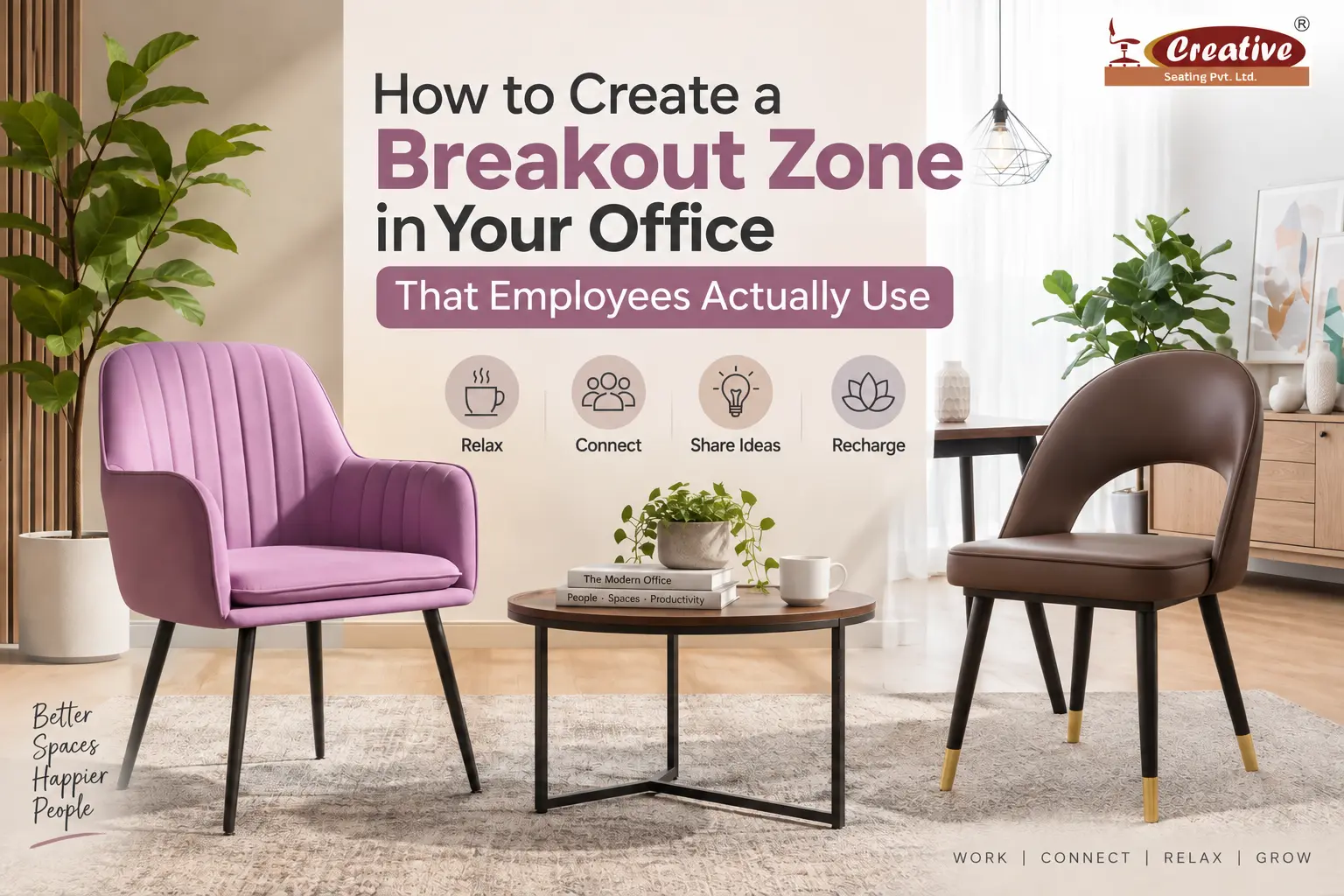
A good office is not only about workstations, cabins and meeting rooms. Employees also need a place where they can take a short break, have an informal conversation, read, think, or simply move away from their desk for a few minutes.
This is where a breakout zone becomes useful.
But simply placing a few chairs in an empty corner does not automatically create a space employees will use. The furniture, location, comfort, layout and overall feel of the area all matter.
With the right breakout area furniture, even a small unused corner can become a practical and comfortable employee space.
What Is an Office Breakout Zone?
A breakout zone is an informal area within an office where employees can step away from their regular workstations.
Unlike a meeting room, it does not always need a fixed purpose. Employees can use it for:
- Taking a short coffee break
- Having an informal discussion
- Reading or checking emails
- Working alone for a change of environment
- Having a quick one-to-one conversation
- Relaxing between work tasks
- Informal team interactions
The important point is that the space should feel different from the workstation area. If employees feel that they are simply sitting at another workstation, they may not use it as intended.
1. Start With the Right Location
Before purchasing furniture, first decide where the breakout zone should be.
You do not necessarily need a separate room. An unused corner near a window, cafeteria, pantry, reception area or open office can work well.
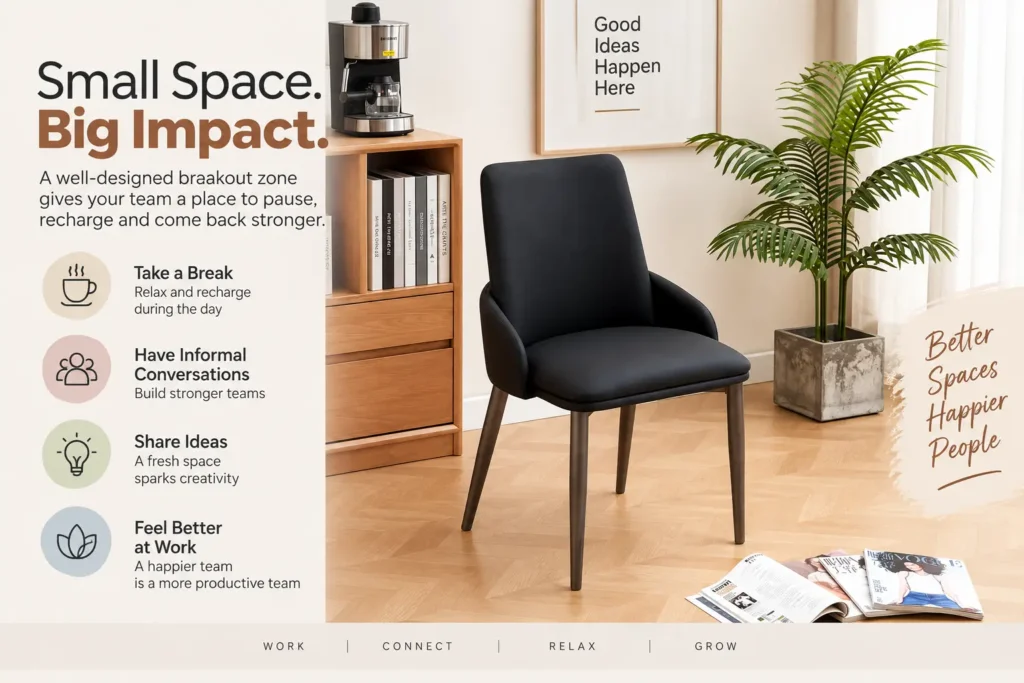
For example, a corner with natural light can be converted into a small relaxation area with two comfortable chairs and a side table.
However, avoid placing the breakout area directly in a high-traffic walkway. Employees may avoid sitting there if people are constantly walking past them.
Practical tip: Choose a location that is easily accessible but provides some separation from busy workstations.
2. Choose Furniture for the Way Employees Will Use the Space
The biggest mistake is selecting furniture only because it looks attractive.
Ask a simple question:
“What will employees actually do here?”
If the area is mainly for short breaks and conversations, comfortable office breakout chairs can be a good choice.
If employees may sit for longer periods, consider more supportive lounge-style seating.
For example, the chair styles shown in the provided images can work in different breakout settings:
- Upholstered chairs with armrests can provide a more relaxed seating experience.
- Compact cushioned chairs can work well around a small table.
- Statement lounge chairs can create a dedicated relaxation corner.
- Wooden or cane-detail chairs can add a more casual and natural character.
- Chairs with softer upholstery can make the space feel less formal than a workstation area.
Important: The chair designs shown in the provided images should be used exactly as they are when creating your blog visuals. Do not modify their structure, shape or design.
3. Mix Seating Instead of Making Everything Look the Same
A breakout zone does not have to look like another workstation row.
One of the practical best furniture ideas for office breakout zones in India is to create a combination of seating options.
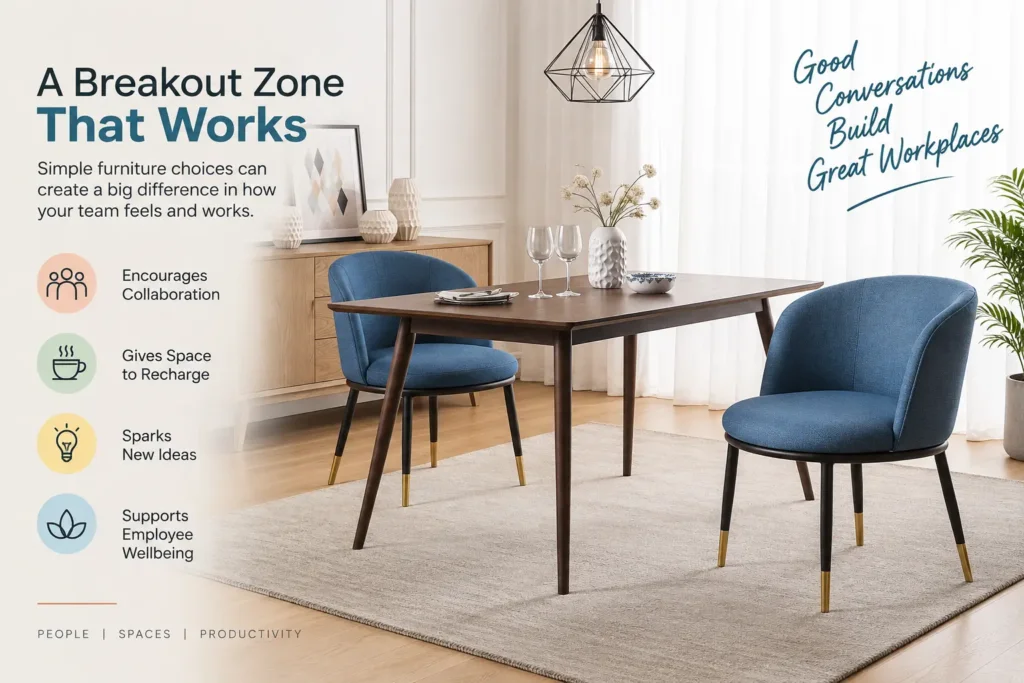
For instance, a small breakout area could include:
- 2–4 comfortable chairs
- A small coffee or side table
- One larger lounge chair
- A compact table for laptops or refreshments
This gives employees some choice.
Someone who wants to have a quick conversation can sit across from another employee. Someone who wants to sit alone can choose a separate lounge chair.
This approach also makes informal office seating more flexible.
4. Add a Small Table for Practical Use
Chairs alone are not always enough.
Employees may want somewhere to keep their coffee, mobile phone, notebook or laptop. A small center table or side table can make the breakout area much more functional.
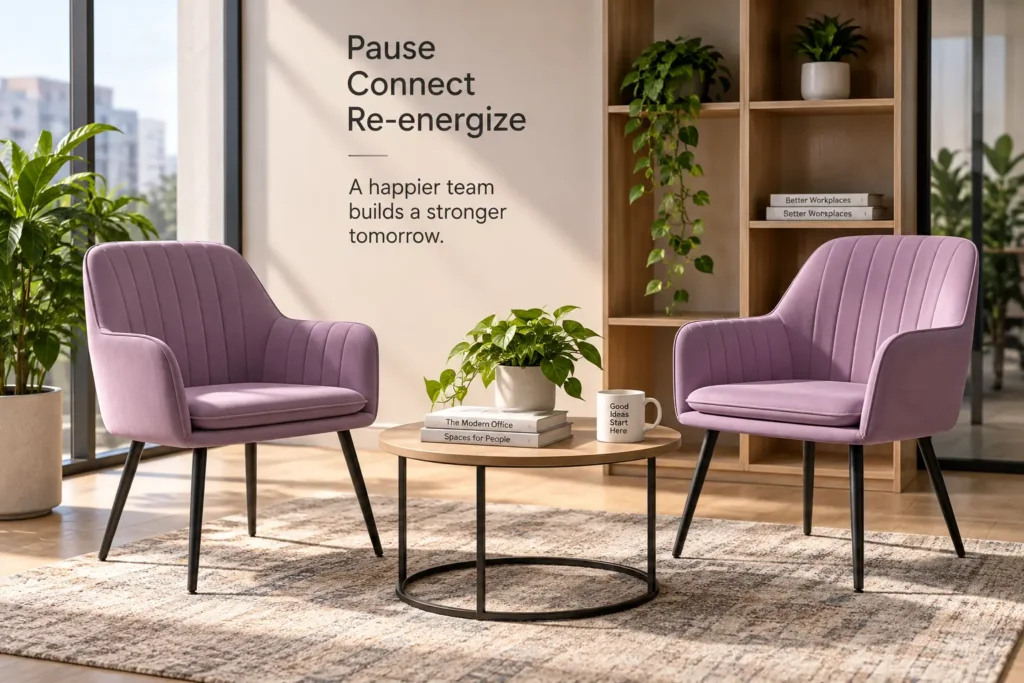
The table does not need to be large.
For a two-chair arrangement, even a compact table between the chairs can be sufficient.
For a larger group, use a practical table that allows people to sit around it without making the area feel crowded.
Simple rule: Choose the table according to the seating capacity rather than filling the space with over sized furniture.
5. Make the Space Comfortable but Easy to Maintain
Breakout furniture is used by many people throughout the day, so appearance is not the only consideration.
When selecting furniture, consider:
- Cushion comfort
- Seat size
- Back support
- Armrest comfort
- Frame strength
- Upholstery quality
- Ease of cleaning
- Everyday durability
This is particularly important when selecting lounge chairs office India for busy workplaces.
Light-colored upholstery may look premium, but if the area receives heavy daily use, maintenance should be considered before making the final choice.
For Indian offices, practical materials that can handle regular use and routine cleaning are often a better choice than furniture selected purely for appearance.
6. Give Employees Some Privacy
A breakout zone should not necessarily be completely isolated, but employees should feel comfortable while using it.
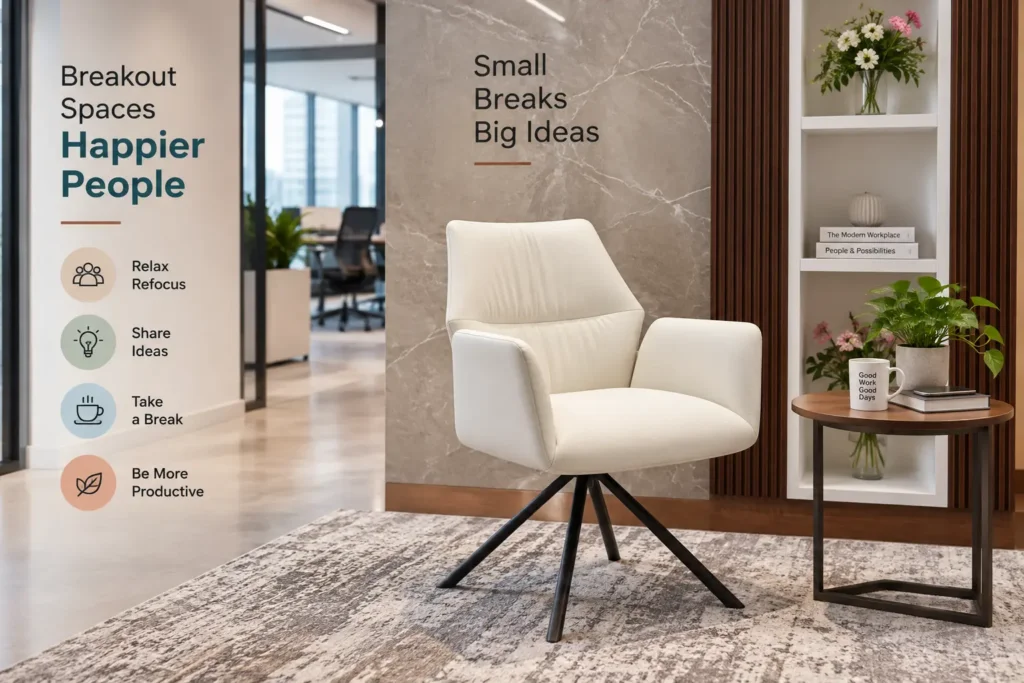
You can create separation using:
- Indoor plants
- Low storage units
- Decorative partitions
- Different flooring
- Rugs
- Lighting
- Furniture positioning
For example, placing two chairs slightly away from the main workstation area can create a natural sense of separation without building a wall.
This is especially useful for employees who want to have a quick informal discussion without occupying a formal meeting room.
7. Use Lighting and Décor to Change the Mood
The atmosphere of a breakout zone can influence whether people actually use it.
Workstations generally need task-focused lighting. A breakout area can have a slightly softer and more relaxed visual character.
Natural light is an excellent option where available.
You can also add:
- Indoor plants
- Simple artwork
- Warm decorative lighting
- Rugs
- Small bookshelves
- Coffee tables
The goal is not to overdecorate the area. It should remain professional while feeling more relaxed than the main work area.
8. Plan the Space Before Buying Furniture
You do not need a huge room to create a breakout zone.
A small corner can accommodate two chairs and a side table, while a larger office may have multiple seating groups.
Instead of asking “How much furniture can fit here?”, ask:
“How many people should comfortably use this space?”
Keep enough room around the chairs so people can sit down and get up easily. Do not position furniture so closely together that movement becomes difficult.
For larger offices, creating two or three smaller seating arrangements can be more useful than putting all the furniture into one large cluster.
9. Should Breakout Furniture Look Different From Workstation Furniture?
Yes, in most cases it is useful to create a visual difference.
Workstation chairs are designed primarily around desk-based working. A breakout chair can focus more on relaxed sitting, informal conversations and short periods away from the desk.
That does not mean the chairs need to look completely different from the rest of the office.
Instead, you can create a difference through:
- Chair shape
- Upholstery
- Color
- Armrests
- Table style
- Arrangement
- Lighting
The chair images provided for this blog demonstrate how different chair styles can create a softer and more relaxed environment while maintaining a professional office appearance.
10. Design the Breakout Zone Around Employee Behavior
Finally, watch how employees use the space.
If employees frequently carry laptops into the area, provide tables that support laptop use.
If the space is mainly used for conversations, arrange chairs facing each other.
If employees use it for short breaks, focus more on comfortable lounge seating.
If it remains empty, do not immediately assume employees do not need a breakout area. The problem could be the location, furniture comfort or layout.
A successful breakout zone should adapt to the people using it.
Practical Breakout Zone Setup
For a small office, you can start with a simple arrangement:
Small breakout zone
- 2 comfortable breakout chairs
- 1 side table
- 1–2 indoor plants
- Suitable lighting
Medium breakout zone
- 4 chairs
- 1 center table
- 1 separate lounge chair
- Plants or a low partition
Large office breakout zone
- Multiple seating groups
- Lounge chairs
- Tables for informal work
- Decorative elements
- Different seating options for individual and group use
You do not have to create an expensive lounge from day one. Start with the available space and add furniture according to actual employee requirements.
Conclusion
A breakout zone works when it is designed around how employees actually use the office, not simply how the space looks in a photograph.
The right breakout area furniture, comfortable office breakout chairs, practical tables and a well-planned layout can turn an unused corner into a valuable part of the workplace.
Whether you have a small office or a large corporate workspace, focus on comfort, accessibility, durability and flexibility. Most importantly, give employees a reason to leave their workstation and use the space.
A well-designed breakout zone can become the place where employees take a quick break, exchange ideas, have informal conversations and return to work feeling refreshed.

Frequently Asked Questions
What furniture is needed for a corporate breakout zone?
A corporate breakout zone usually needs comfortable chairs, lounge seating, a center or side table and suitable lighting. Depending on the space, you can also add plants, rugs, partitions or small storage units.
How much space does a breakout area need?
There is no fixed size for every office. A small corner can work for two chairs and a side table, while larger areas can accommodate multiple seating groups. The key is to leave enough space for comfortable movement.
Should breakout area chairs be different from workstation chairs?
Ideally, yes. Workstation chairs are designed mainly for desk-based work, while breakout chairs can provide a more relaxed seating experience. Using different styles, upholstery or arrangements can also make the area feel separate from the main workstation zone.

