
Currently Empty: ₹0.00

Introduction
If you work long hours at a desk, your chair plays a much bigger role in your health than you may realise. Many people feel confused when choosing between an executive chair and an ergonomic chair. Both look professional, both are comfortable, but they are designed for different working styles and needs.
Some people use an executive chair at the office but prefer an ergonomic chair at home. Others aren’t sure which one is better for their back, posture, or daily comfort.
This blog will help you clearly understand the real difference between executive chairs and ergonomic chairs, so you can make the right choice for your body and your work routine.
Why Your Sitting Posture Matters
No matter which chair you choose, one rule always stays the same posture is important.
A healthy sitting position includes:
- Straight but relaxed back
- Shoulders relaxed, not raised
- Natural curve in the lower back
- Feet flat on the floor
Poor posture over long hours can lead to back pain, neck pain, headaches, and fatigue. The right chair helps your body stay in a natural position without extra effort.
What Is an Ergonomic Chair?
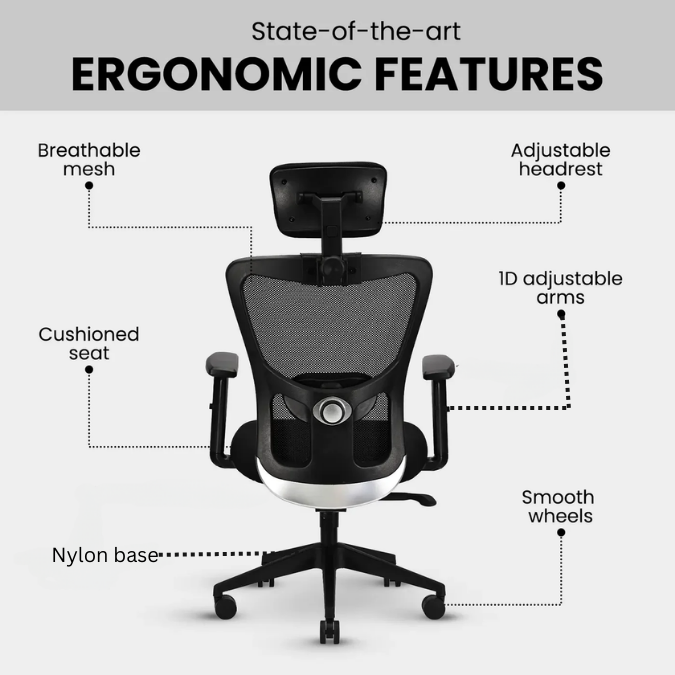
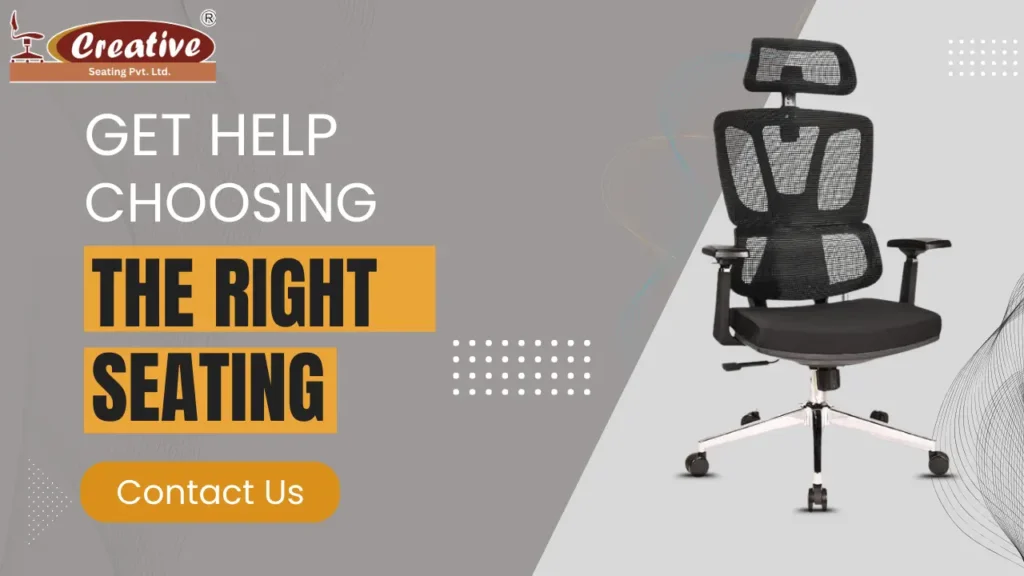
An ergonomic chair is designed to support the human body naturally during long working hours. It focuses on comfort, movement, and posture correction.
Key Features of Ergonomic Chairs
- Adjustable seat height
- Adjustable armrests
- Proper lumbar (lower back) support
- Mesh back for airflow
- Headrest for neck support
An ergonomic chair allows you to:
- Sit with feet flat on the floor
- Keep arms parallel to the desk
- Maintain eye level with the monitor
These chairs are especially useful if:
- You work from home
- You frequently get up and sit down
- You change positions often during the day
Ergonomic chairs adapt to your body, not the other way around.
What Is an Executive Chair?
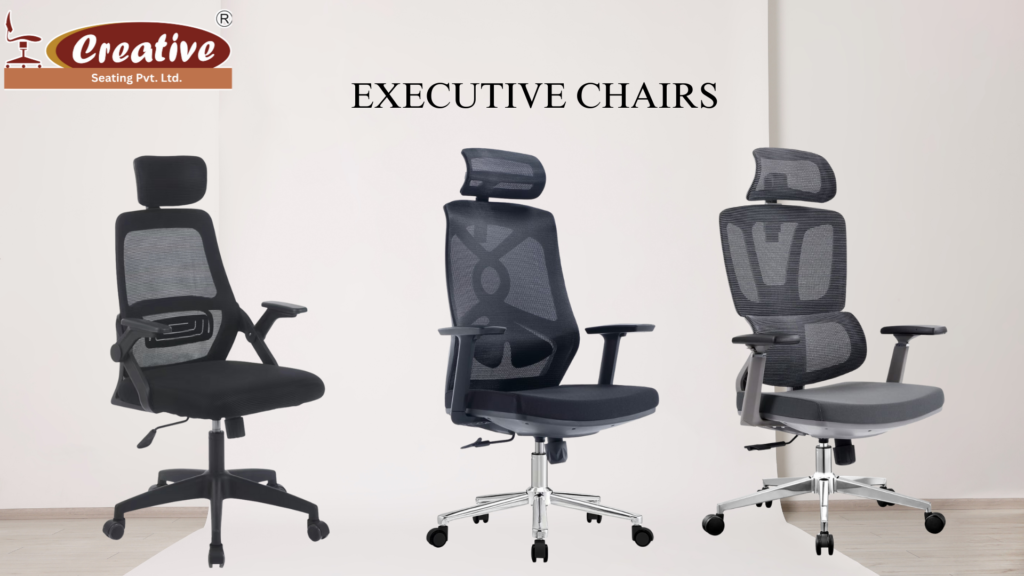
An executive chair is a premium, high-back chair commonly used in cabins, boardrooms, and senior management offices. These chairs are designed for people who spend long continuous hours at a desk.
Key Features of Executive Chairs
- High backrest for full upper-body support
- Wider seat for comfort
- Strong structure and premium finish
- Designed to give a professional and authoritative look
Executive chairs are ideal if:
- You sit for long, uninterrupted hours
- You prefer a firm and stable seating position
- You want a premium look for your office or cabin
They also create a strong sense of status and professionalism, which is why they are commonly used by senior professionals.
Executive Chair vs Ergonomic Chair: The Real Difference
Here’s the simple truth:
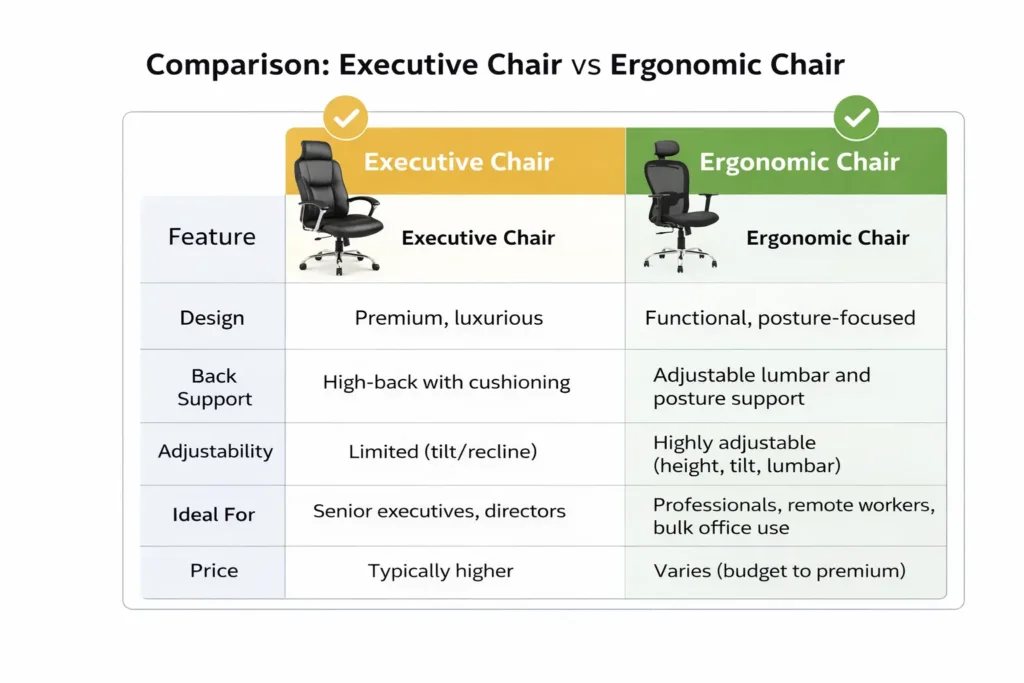
- Ergonomic chairs focus on health, movement, and posture
- Executive chairs focus on comfort, space, and authority
Ergonomic chairs help reduce:
- Lower back pain
- Neck strain
- Shoulder fatigue
- Headaches caused by posture
Executive chairs provide:
- Full-body support
- Stable seating for long desk work
- A premium and professional appearance
There is no single “perfect chair” for everyone. The right chair depends on:
- Your height and body type
- How many hours you sit
- How often you move
- Your personal comfort preference
Are Ergonomic Chairs Always Better?
Many people assume ergonomic chairs are always the best option, but that’s not completely true.
Some users feel:
- Too many adjustments feel confusing
- Certain ergonomic designs feel stiff
- Lack of proper movement causes fatigue
In reality, comfort varies from person to person. Some people feel better on an executive chair, while others prefer ergonomic support. What matters most is how well the chair fits your body and work style.
Which Office Chair Is Best for Your Back?
Instead of focusing only on chair type, focus on features.
What to Look For
- Adjustable lumbar support
- Ergonomic tilt mechanism
- Comfortable seat cushioning
- Proper armrest height
- Stable base and smooth wheels
A chair that supports the natural curve of your spine is always better than one that forces a rigid posture.
Practical Tip: Choose Based on Your Work Style
- Work from home / flexible movement → Ergonomic Chair
- Long desk hours / cabin use → Executive Chair
- Back pain issues → Ergonomic Chair
- Premium office setup → Executive Chair
Conclusion
Choosing between an ergonomic chair and an executive chair is not about trends—it’s about your comfort, health, and daily work routine.
Ergonomic chairs are ideal for posture support and flexibility, while executive chairs offer premium comfort and authority for long desk hours. The best chair is one that keeps you comfortable, productive, and pain-free throughout the day.
FAQs
Which chair is better for long working hours?
Both can work well. Ergonomic chairs are better for movement, while executive chairs suit long uninterrupted sitting.
Are executive chairs good for back pain?
Yes, if they have proper back and lumbar support.
Can ergonomic chairs be used in offices?
Absolutely. They are widely used in modern offices and home workspaces.
How do I choose the right chair?
Consider your height, sitting hours, posture needs, and comfort preference.

