
Currently Empty: ₹0.00


Choosing a chair may seem simple at first, but once you start exploring different styles, materials, and designs, it can quickly become overwhelming. From modern home seating to cozy lounge chairs and stylish accent pieces, there are endless options available today. The challenge is finding a chair that not only looks beautiful but also feels comfortable and fits perfectly into your lifestyle.
A chair is more than just a furniture item. It’s where you relax after a long day, enjoy conversations with family, work from home, read books, or entertain guests. The wrong chair can make your room feel uncomfortable and incomplete, while the right one can completely transform your space.
In this furniture buying guide, we’ll help you understand how to choose the perfect chair for home use without regret. Whether you are shopping for comfortable chairs for living room use, dining chairs, or modern seating for a compact apartment, these practical tips will help you make the right decision.
Why Choosing the Right Chair Matters
Most people choose home chairs based only on appearance. While style is important, comfort and functionality matter just as much. A chair may look stunning online, but if it feels uncomfortable after a few minutes of sitting, it’s not the right choice.
The best chair for home should offer the perfect balance of:
- Comfort
- Design
- Durability
- Practicality
A thoughtfully selected chair improves your posture, enhances your room décor, and creates a welcoming atmosphere in your home.
1. Understand the Purpose of the Chair
Before buying a chair, ask yourself one important question:
Where will this chair be used?
Different spaces require different types of seating.
Living Room Chairs
Living room chairs should feel cozy and inviting. Since they are often used for relaxing, watching TV, or entertaining guests, comfort should be the priority.
Dining Chairs
Dining chairs need proper back support and the correct height for your dining table. They should also be easy to move and maintain.
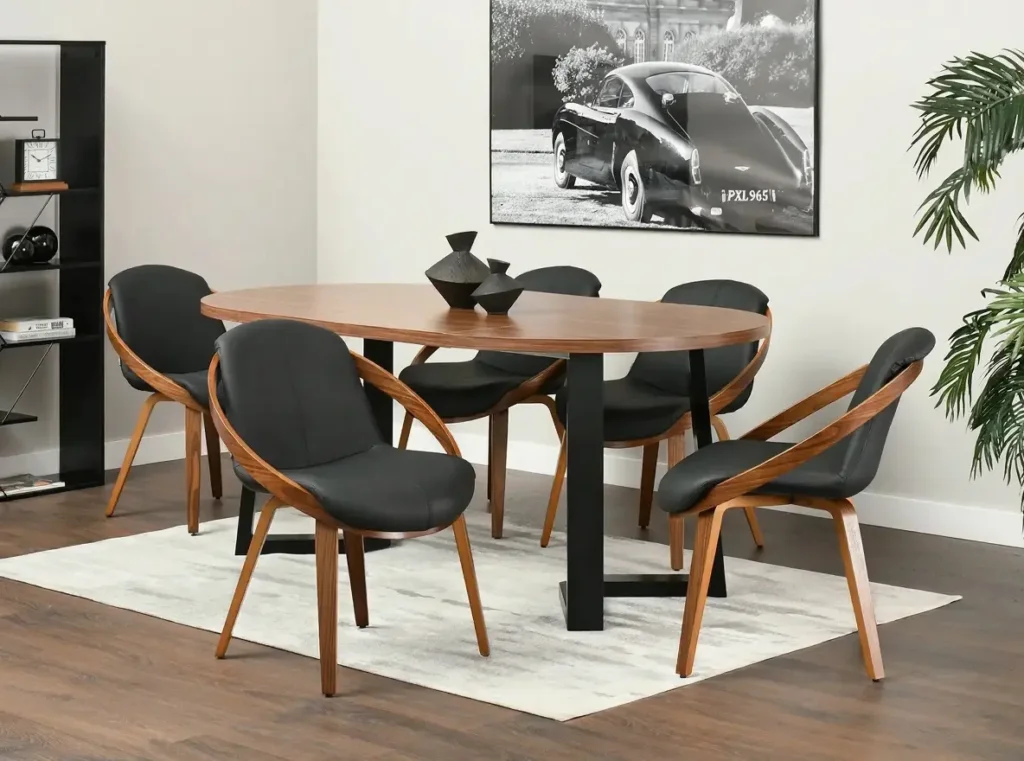
Accent Chairs
Accent chairs are usually decorative pieces designed to enhance the look of a room. These chairs focus more on style while still offering moderate comfort.
Reading or Lounge Chairs
These chairs should provide excellent back and arm support for long sitting sessions.
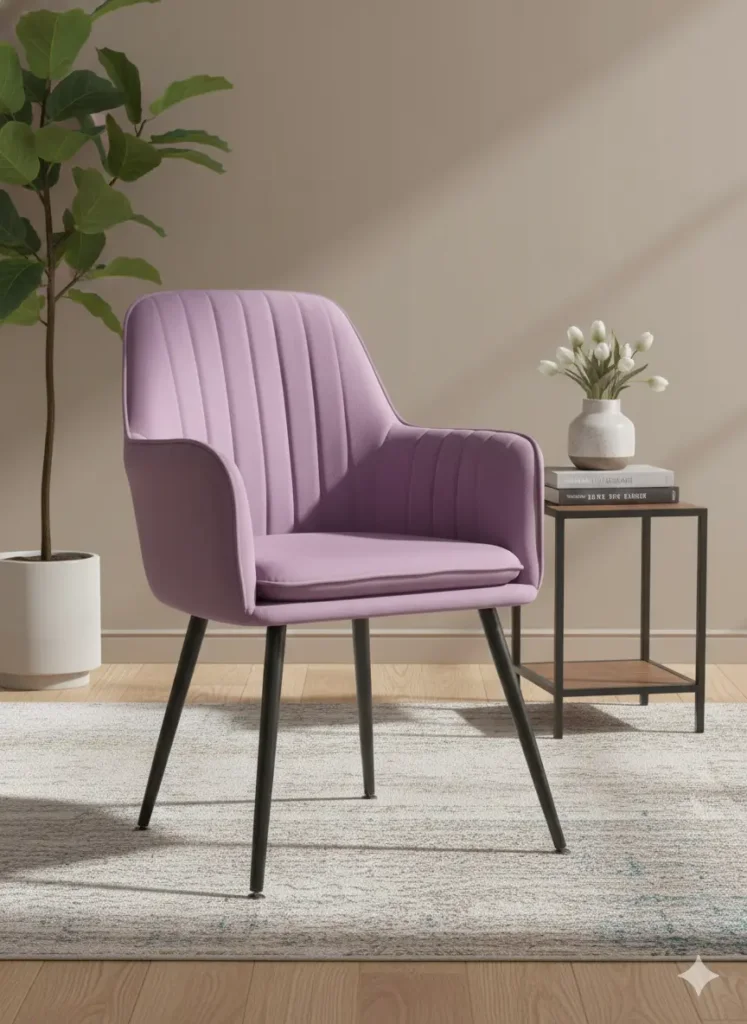
Home Office Chairs
Ergonomic support becomes essential when working for long hours.
Understanding the chair’s purpose helps narrow your options and prevents buying furniture that doesn’t fit your daily needs.
2. Comfort Should Always Come First
One of the biggest mistakes people make is prioritizing looks over comfort. A stylish chair may look attractive in photos but become uncomfortable after regular use.
When searching for comfortable chairs, pay attention to:
- Cushion quality
- Back support
- Seat depth
- Armrest height
- Fabric texture
- Sitting posture
If possible, always test the chair before buying. Sit naturally and check whether your back feels supported. Your feet should comfortably touch the floor, and the chair should not feel too hard or too soft.
A comfortable chair improves your posture and prevents body pain over time.
3. Measure Your Space Carefully
A common furniture buying mistake is purchasing a chair without measuring the available space.
Before buying:
- Measure your room dimensions
- Check doorway and hallway widths
- Leave walking space around furniture
- Compare chair size with nearby furniture
If you are looking for the best chair for small spaces at home, choose designs with:
- Slim legs
- Open frames
- Compact structures
- Lightweight materials
Bulky chairs can make smaller rooms feel crowded and uncomfortable.
Modern home seating often works well in compact spaces because of its clean lines and minimal design.
4. Choose the Right Material
The material of a chair affects comfort, durability, maintenance, and overall appearance.
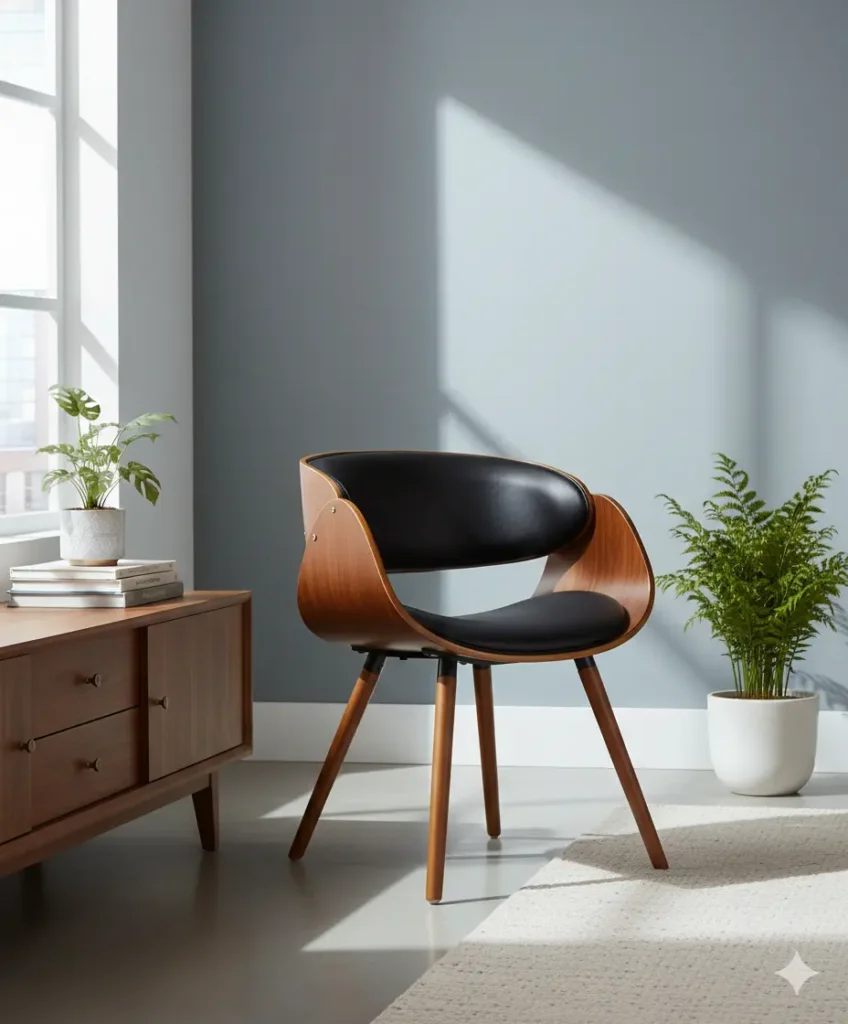
Wooden Chairs
Wooden chairs create a timeless and warm feel. They fit beautifully into Scandinavian, modern, and minimalist interiors.
Fabric Chairs
Fabric chairs feel soft and cozy, making them perfect for living rooms and bedrooms. However, they may require regular cleaning.
Leather Chairs
Leather chairs provide a luxurious and elegant look. They are durable and easy to clean, which makes them ideal for modern homes.
Cane or Rattan Chairs
Cane chairs bring a natural and airy appearance to interiors. They are lightweight and visually appealing.
Metal Frame Chairs
Metal chairs offer durability and a modern industrial touch.
Choose materials that suit your lifestyle and maintenance preferences.
5. Match the Chair With Your Interior Style
Your chair should complement the overall look of your home.
For modern home seating, focus on:
- Neutral colors
- Minimalist shapes
- Clean lines
- Mixed materials like wood and metal
For cozy interiors:
- Soft fabrics
- Rounded edges
- Warm colors
For luxury-inspired interiors:
- Leather finishes
- Elegant curves
- Rich textures
The goal is not to perfectly match every furniture piece but to create visual harmony in the room.
6. Consider Daily Usage
Some chairs are designed mainly for decoration, while others are made for everyday comfort.
If the chair will be used daily, prioritize:
- Strong frame construction
- High-density foam
- Durable fabric
- Easy maintenance
Families with children or pets should avoid delicate materials that stain or scratch easily.
A durable chair lasts longer and provides better value over time.
7. Don’t Ignore Chair Height
Chair height plays a major role in comfort.
Dining chairs should fit comfortably under the dining table without making seating awkward.
Lounge chairs should allow you to sit and stand easily.
A chair that is too low or too high can become uncomfortable very quickly.
Always compare the seat height with the intended use area before purchasing.
8. Think About Maintenance
Beautiful furniture still needs proper care.
Before buying a chair, ask yourself:
- Is the fabric easy to clean?
- Does the material scratch easily?
- Will the color fade over time?
- Is regular maintenance required?
Low-maintenance chairs are ideal for busy households.
Leather and performance fabrics are often easier to maintain than delicate upholstery materials.
9. Check the Build Quality
A chair may appear premium in pictures but feel unstable in real life.
Always check:
- Frame strength
- Stable legs
- Joint quality
- Finishing details
- Material durability
Avoid chairs that wobble or feel weak.
Good-quality furniture may cost more initially, but it saves money in the long run.
10. Balance Budget and Quality
Everyone wants affordable furniture, but choosing the cheapest option often leads to disappointment.
Instead of focusing only on price:
- Compare quality
- Read reviews
- Check durability
- Think long-term
Sometimes spending slightly more gives you years of comfort and reliability.
Furniture should be viewed as an investment rather than a short-term purchase.
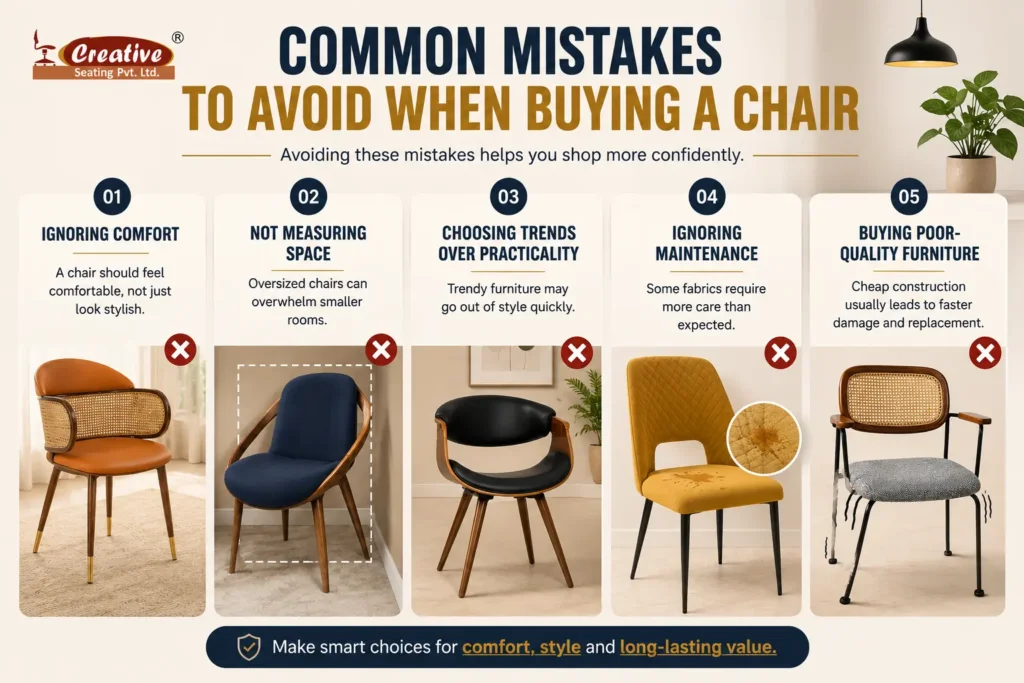
Common Mistakes to Avoid When Buying a Chair
Here are some mistakes buyers often make:
Ignoring Comfort
A chair should feel comfortable, not just look stylish.
Not Measuring Space
Oversized chairs can overwhelm smaller rooms.
Choosing Trends Over Practicality
Trendy furniture may go out of style quickly.
Ignoring Maintenance
Some fabrics require more care than expected.
Buying Poor-Quality Furniture
Cheap construction usually leads to faster damage and replacement.
Avoiding these mistakes helps you shop more confidently.
Best Chair Styles for Different Spaces
Living Room
Upholstered lounge chairs and accent chairs work best.
Dining Room
Slim dining chairs with proper support are ideal.
Bedroom
Soft accent chairs create cozy reading corners.
Home Office
Ergonomic seating improves productivity and comfort.
Small Apartments
Compact modern chairs with open designs help maximize space.
How to Test a Chair Before Buying
If shopping in-store, always test the chair before purchasing.
Ask yourself:
- Is the seat comfortable?
- Does my back feel supported?
- Are the armrests comfortable?
- Is it easy to sit and stand?
- Does the chair feel stable?
Online shopping also requires careful attention to customer reviews, dimensions, and product descriptions.
Conclusion
Choosing the perfect chair for your home is about more than simply finding something attractive. The ideal chair should combine comfort, functionality, durability, and style to suit your everyday lifestyle.
Whether you are searching for comfortable chairs for living room use, stylish modern home seating, or the best chair for small spaces at home, taking time to choose carefully can save you from future regret. A good chair not only improves the appearance of your space but also enhances your comfort and daily experience.
Before making your final decision, always consider room size, comfort level, material quality, maintenance needs, and how often the chair will be used. Investing in the right chair means investing in your home and personal comfort.
Instead of following short-term trends, choose furniture that truly fits your space, supports your lifestyle, and makes your home feel warm, functional, and inviting.

Frequently Asked Questions (FAQs)
1. How do I choose the right chair for my home?
Start by considering comfort, room size, material, design style, and daily usage needs. The best chair should match both your space and lifestyle.
2. What type of chair is best for daily use?
Comfortable chairs with strong back support, durable frames, and quality cushioning are best for everyday use.
3. Should I prioritize comfort or design?
Ideally, both should work together. However, comfort should always come first for chairs used regularly.
4. How do I pick chairs for small spaces?
Choose compact chairs with slim frames, open-leg designs, and lighter colors to create a spacious feel.
5. What mistakes should I avoid when buying a chair?
Avoid ignoring comfort, skipping measurements, choosing poor-quality materials, and buying furniture based only on trends.

